



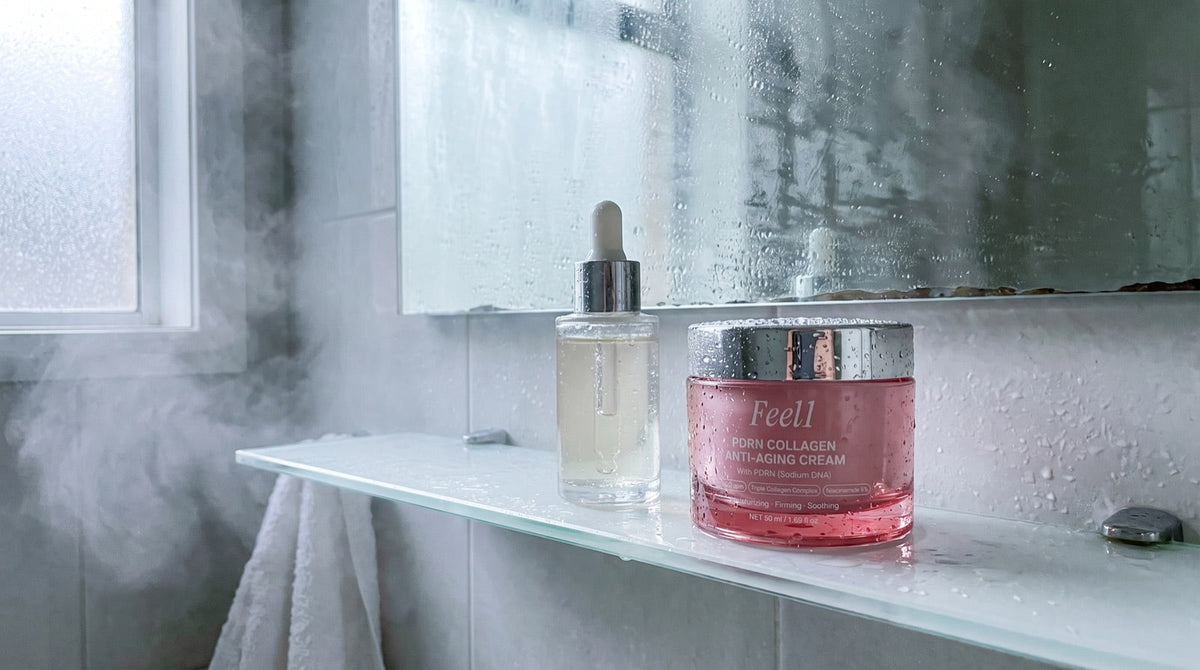
Short answer: A PDRN serum is a thin, watery layer that sits under your moisturizer; a PDRN cream is the moisturizer. Oily skin, humid weather or a routine you already like points to a serum. Dry, mature or winter skin that wants fewer steps points to a cream. The active itself is the same.
A quick word before the comparison: Feel1 sells a PDRN cream, so we have a stake in this question. We will still tell you where a serum makes more sense, because the wrong format is the fastest way to give up on an ingredient after two weeks. What follows is a guide to formats, not a ranking of brands. New to the ingredient? Start with what PDRN is in skincare.

Four ways PDRN reaches your skin
PDRN shows up on the label as sodium DNA. A dropper bottle or a jar changes little about the molecule and a lot about what travels with it: water, oil, film-formers. Those carriers decide how a product feels and what it can replace in your routine.
Serum. Mostly water with humectants such as glycerin and hyaluronic acid, often a light gel texture. It spreads thin, absorbs within a minute and leaves little behind. A serum is built to be one layer of several, so it almost always needs something on top to keep the water it brings from evaporating.
Essence. Even thinner than a serum, sometimes close to water, applied by patting into the skin with the palms. Popular K-beauty PDRN products from brands like Anua, VT or Medicube sit somewhere between essence and serum, and the name on the bottle is often more marketing than chemistry.
Cream. Water plus oils, butters or silicones, held together by emulsifiers. A cream does two jobs at once: it delivers its actives and it seals the surface. So a PDRN cream can replace your moisturizer. Gel-creams are the lighter branch of the family, with less oil and more water.
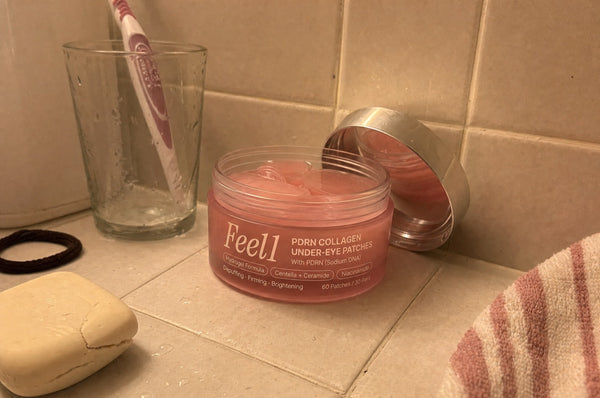
Mask or patch. A sheet mask or hydrogel patch holds a PDRN-containing fluid against the skin for ten to twenty minutes. The effect shows quickly and fades quickly: an occasional boost, not a daily base. We cover the under-eye version in PDRN eye patches explained.
PDRN formats side by side
The monthly cost below is a rough guide, based on typical US list prices for Korean PDRN products in September 2026 and normal daily use. Sale prices and bigger bottles change it quickly.
| Format | Texture | Best for skin type | Where in the routine | Typical cost per month |
|---|---|---|---|---|
| Essence | Watery, almost no slip | Oily, combination, acne-prone | First step after cleansing | About $10 to $15 |
| Serum | Light gel or fluid | Oily to normal; any type under a moisturizer | After essence or toner, before moisturizer | About $12 to $20 |
| Gel-cream | Bouncy, low oil | Normal to combination; dry skin in summer | Last step at night, or under sunscreen | About $10 to $20 |
| Rich cream | Thick, cushiony | Dry, mature, wind- or heat-dried | Last step at night | About $10 to $20 |
| Sheet mask or patch | Soaked sheet or hydrogel | Most types, as an extra | After cleansing, one to three times a week | About $15 to $40, depending on how often |
Per month the formats cost about the same, since a jar is bigger but each use takes more. The real saving is choosing one PDRN product, not three: stacking an essence, serum and cream that all list sodium DNA mostly stacks the bill.
Matching the format to your skin and your weather
Oily or acne-prone skin. A serum or essence, followed by the light moisturizer you already trust. Rich creams tend to feel heavy on congested skin.
Combination skin. Either works; a serum all over plus a gel-cream on the cheeks is a common middle ground.
Dry or mature skin. A cream earns its place here. After forty the skin produces less oil and loses water faster, and a thin serum on its own often leaves it tight within an hour. A PDRN cream replaces one step instead of adding one. For the broader picture of what changes with age, see a skincare routine over 50.
Reactive or barrier-damaged skin. Fewer products is the priority, so one fragrance-free cream usually beats a serum plus a cream. If you are not sure whether your barrier is compromised, the signs of a damaged skin barrier is a good self-check.
Climate and season. Humidity changes everything. In a sticky summer in Florida or Texas, a serum and sunscreen may be all your face wants. In a dry Colorado winter or a heated apartment, a cream holds up far better. Switching formats with the seasons is perfectly fine.
Layering and how much to use

The rule is thin to thick: essence, then serum, then cream, then sunscreen in the morning. The full order, including where acids and retinoids fit, is in our skincare layering order guide, so we will stick to PDRN-specific points here.
- Essence: a small pool in the palm, patted in until the skin feels tacky rather than wet.
- Serum: two to three drops, pressed over the face and neck on skin that is still slightly damp. More does not help; it pills under the next layer.
- Cream: about the size of a pea for the face, a little more if you include the neck. Warm it between two fingers and press it in.
- With retinol: PDRN is generally easy to pair, but the order and timing matter. We explain it in how to use PDRN with retinol.
Whichever format you choose, judge it after six to eight weeks of steady use, not after a few nights.
When a serum is the better choice
Since we make a cream, here is the other side stated plainly. A PDRN serum is the smarter buy if:
- Your skin is oily and any cream feels like a layer of film by midday.
- You live somewhere humid and a moisturizer already feels like too much in summer.
- You love your current moisturizer and just want to add PDRN without replacing it. A serum slots in underneath without changing anything else.
- You want PDRN in the morning under makeup. Thin layers sit better under foundation than a rich cream.
The well-known Korean serums are light, widely available and easy to add to any routine. The catch is that they are one more step, and on dry skin they rarely hold enough water without a cream on top.
How to read a PDRN label
Whatever the format, five details on the carton are worth a look before you pay.
1. Where the PDRN comes from. The classic source is salmon or trout DNA, and almost all published PDRN research, mostly on wound healing and injections, used that kind. Plant and ferment alternatives, made from ginseng, rose or probiotics, arrived later, and a 2026 dermatology review describes their evidence as still thin. They are a sensible pick if you are vegan or allergic to fish, but not a proven equivalent.
2. Whether a strength is declared. Most brands list PDRN without an amount. Some declare it in ppm (parts per million). Read these numbers carefully: a figure can refer to pure PDRN or to a PDRN solution, which is not the same thing. VT, for example, states a high ppm for its ginseng PDRN solution, while its INCI list places sodium DNA at the very end.
3. Where sodium DNA sits in the INCI list. Ingredients above one percent are listed in descending order, and those below one percent can appear in any order at the end. A position near the end does not mean the product is useless, since actives often work at small amounts, but it tells you PDRN is not the main ingredient by weight.
4. Fragrance. Look for "fragrance" or "parfum" and for essential oils. Some popular serums list it, others do not. If your skin reacts easily, choose fragrance-free in any format.
5. The rest of the formula. On the skin, PDRN acts mainly as a hydrating and soothing ingredient; injected polynucleotides have more data than creams and serums. So the supporting ingredients matter. Niacinamide at around five percent has decent evidence for visibly smoother, more even skin, and humectants and barrier lipids do much of the everyday work. What the ingredient may help with is summarized in PDRN benefits for skin.
One more point: US cosmetics are not approved like drugs, so a label may describe how skin looks and feels, not claim to repair tissue. Careful wording is a good sign.
Why we put our PDRN in a cream

We make skincare mainly for people over forty, and at that age one fewer step is usually more welcome than one more bottle. That settled the format for us. A gel-cream is light enough for normal and combination skin and rich enough to be the last layer at night.
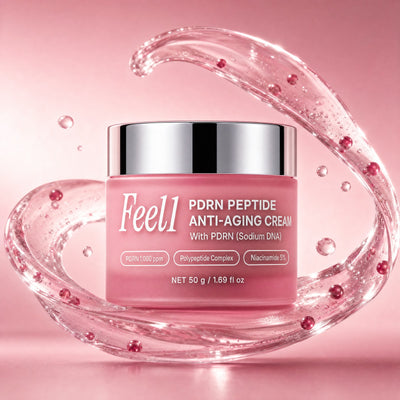
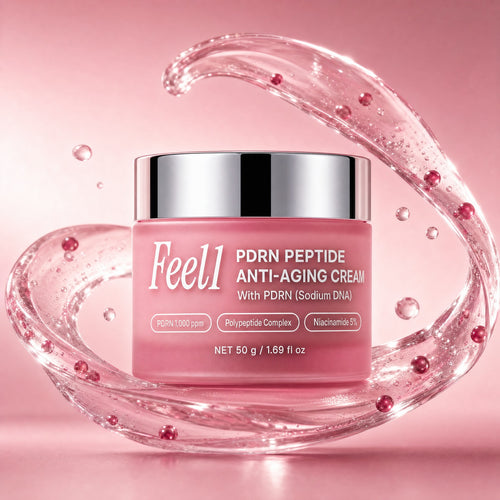
Our label names the source (salmon), a PDRN strength of 1,000 ppm and five percent niacinamide next to a collagen complex, so every point from the label checklist can be verified. If your skin is oily or your summers are humid, the serum route above is honestly the better fit. If you want one product that does the moisturizer's job and brings PDRN with it, this is what we built.
How a cream compares with the clinic treatment: salmon sperm facial vs PDRN cream.
This article is general information, not medical advice. With a fish allergy, skip salmon-based PDRN; for skin problems that persist, see a dermatologist. Competitor details and prices change; check the current box before you buy.
Sources
- Squadrito et al., PDRN pharmacology review, Frontiers in Pharmacology (2017): PubMed
- Lampridou et al., systematic review of polynucleotides in aesthetics, Journal of Cosmetic Dermatology (2025): PubMed
- Arora, narrative review of PN and PDRN in dermatology, Journal of Cutaneous and Aesthetic Surgery (2026): jcasonline.com
- Bissett et al., topical niacinamide and facial aging, Dermatologic Surgery (2005): PubMed
- U.S. FDA, cosmetic or drug guidance: fda.gov
Frequently asked
Can I use a PDRN serum and a PDRN cream together?
Yes, they will not clash. Apply the serum first and the cream on top. It is rarely necessary, though: using PDRN in two layers mostly doubles the cost, and there is no evidence that more layers bring more benefit. Pairing a PDRN serum with a plain moisturizer, or using a PDRN cream alone, is usually enough.
Is a PDRN essence the same as a serum?
Close, but not quite. An essence is thinner and is patted in as the first hydrating step, while a serum has a little more body and goes on after it. Many Korean PDRN products blur the line, so judge by texture rather than by the name on the bottle. Either one still needs a moisturizer on top.
Which PDRN format is best for oily skin?
A serum or essence, followed by a light, oil-free moisturizer. Thin water-based layers hydrate without adding oil, and they are easy to adjust with the seasons. If you prefer a cream, choose a gel-cream rather than a rich one and use it at night, where a little extra weight bothers you less.
How long does a PDRN cream last?
Used once a day at night, a standard jar typically lasts somewhere between six and ten weeks, depending on how much you apply and whether you include your neck. Twice daily use roughly halves that. Keep the lid closed and the jar out of direct sun, and use a clean fingertip or spatula.