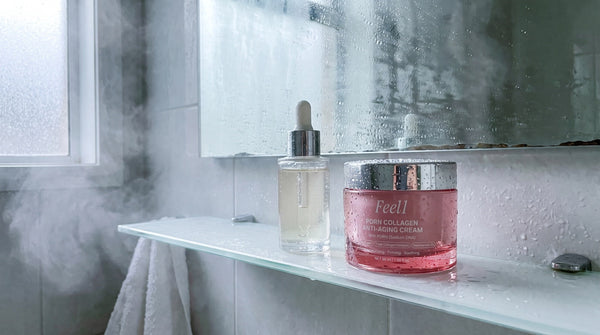




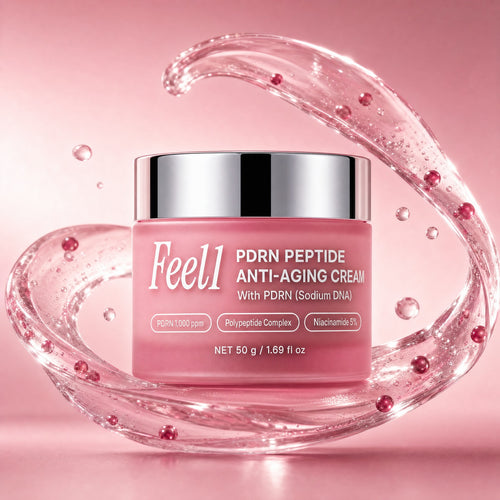

Salmon DNA in a face cream sounds like a headline someone made up. It isn't — PDRN has been used in Korean clinics for years, and there is real science underneath it. There are also real limits, and almost nobody writes about those.
PDRN arrived in Western bathrooms the way most K-beauty ingredients do: through a clinic treatment with an unforgettable nickname. Once a few well-known faces mentioned "salmon sperm facials", searches went vertical, and within a year the same four letters were on jars in every beauty aisle.
This guide explains what the molecule is, what it plausibly does, where the injectable version and the cream version genuinely differ, and what to expect from a topical over four weeks.
What PDRN actually is
PDRN stands for polydeoxyribonucleotide. It is a mixture of DNA fragments — short chains of nucleotides — extracted, purified and sterilised for use on or in the body.
The source is salmon or trout: the milt (sperm) or the roe, both of which are exceptionally DNA-dense and are byproducts of the food industry rather than something farmed for cosmetics. The raw material is then broken into fragments of a defined length and purified to remove protein, which is the step that matters — an impure preparation is what would cause a reaction, and purity above 95% is the standard the medical-grade material is held to.
Why salmon, of all things
Two reasons, one practical and one biological. Practically, salmon milt is an abundant, cheap, well-characterised source. Biologically, DNA is DNA: the nucleotide building blocks are identical across species, so fragments from a fish are chemically indistinguishable from fragments of your own once broken down. There's no species-specific "salmon" quality being transferred. That part of the marketing is theatre.

How it's thought to work
Two mechanisms are usually described, and they're worth separating because one is much better established than the other.
1. Adenosine A2A receptor activation
PDRN fragments act on the A2A adenosine receptor, a switch involved in regulating inflammation and tissue repair. Activating it is associated with reduced inflammatory signalling and increased growth factor activity in wound-healing research. This is the mechanism with the most published support, and it's why PDRN appeared first in wound care and joint injections rather than in cosmetics.
2. The salvage pathway
Cells can build new DNA from scratch, or they can recycle existing nucleotides — the second route being far cheaper in energy terms. The proposal is that PDRN supplies ready-made nucleotides that cells can pick up and reuse. Plausible, less thoroughly demonstrated in skin specifically, and often stated with more confidence than the evidence supports.
Both routes point in the same direction: calmer, better-supported repair activity, and more work from fibroblasts, the cells that produce collagen and elastin.

The part most articles skip: injection versus cream
This is the single most important thing to understand before spending money, so here it is plainly.
The clinic treatment — often sold under the brand name Rejuran, and correctly called a polynucleotide or PN treatment — puts the material through the skin barrier with a needle, directly into the dermis where fibroblasts live. That's the version the striking before-and-after photos come from, and it costs somewhere between a few hundred and over a thousand pounds or dollars per session, usually across three sessions.
A cream cannot do that. PDRN is a large molecule, and large molecules do not readily cross an intact skin barrier. Anyone claiming a topical delivers injection-equivalent results is either confused or hoping you are.
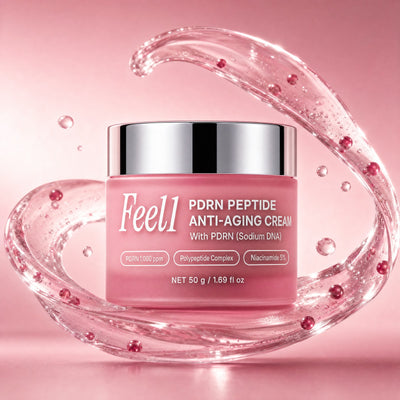
What a well-made topical PDRN product can reasonably do is work at the surface and in the upper layers: PDRN is strongly water-binding, so it hydrates and plumps; it is soothing on reactive skin; and it is almost always formulated alongside ingredients that do have good topical evidence — niacinamide, hydrolysed collagen, humectants. The result is real but different in kind: better hydration, less visible crepiness, a calmer and smoother-looking surface over several weeks.
That's a good product. It just isn't an injection, and buying it while expecting one guarantees disappointment.

PDRN, PN, Rejuran: the naming mess
- PDRN — polydeoxyribonucleotide. Shorter DNA fragments. The term you'll see on cosmetic labels, sometimes written as Sodium DNA in an ingredient list.
- PN — polynucleotides. Longer chains, used in injectables, where chain length affects how the gel behaves under the skin.
- Rejuran — a brand of PN injectable, not an ingredient. Being "Rejuran-inspired" means nothing on a jar.
- "Salmon sperm facial" — the internet's name for a clinic treatment using one of the above. Not a product category.
What to realistically expect from a topical, week by week
| Days 1–7 | Immediate hydration and a smoother surface feel. This is the humectant effect and it's genuine, but it isn't structural. |
| Weeks 2–3 | Reactive skin usually settles: less tightness, less visible redness after cleansing. Fine dehydration lines look softer. |
| Week 4 | One full turnover cycle. This is the earliest honest point to judge — take a photo now and compare it with one from day one, same light, same time of day. |
| Beyond | Changes in firmness, if they come, come slowly and are modest with any topical. Anyone promising more in a month is selling, not informing. |
How to use it
- On damp skin, early in the routine. PDRN products are water-based and belong under anything richer, not on top of it.
- Both mornings and evenings is fine — it's not photosensitising and it doesn't need a rest day.
- Don't stack it with a strong acid in the same application. Not because of a chemical clash, but because a freshly exfoliated barrier is a barrier you've just asked to work harder. Acids one night, PDRN the next.
- It pairs well with niacinamide, peptides and hyaluronic acid — most good PDRN formulas already contain at least one of them.
- Seal it. A water-phase product evaporates. Follow with something occlusive if your skin is dry.
Who it suits
Skin that is dehydrated, dull, reactive or thinning — which in practice means a lot of skin over forty-five, and most skin after menopause. It's also a sensible choice for the under-eye area, where the skin is thin, dryness shows first, and a soothing water-binding treatment does visible work quickly.
It is not a treatment for acne, pigmentation or deep static wrinkles. Different problems, different tools.

Frequently asked
Is PDRN safe?
Purified PDRN has a long clinical record and is generally well tolerated topically. As with anything new, patch test on the inner forearm or behind the ear for two days first.
Is it suitable if I don't eat fish?
It's fish-derived, so it isn't vegan or vegetarian. A fish allergy is a genuine reason for caution — the purified material contains essentially no protein, which is what allergies respond to, but if you have a significant allergy, ask a doctor rather than an internet article.
Can I use it with retinol?
Yes, and it's a good pairing — the soothing, hydrating side of PDRN offsets what retinol does to the barrier. Use them at different steps: PDRN on damp skin first, retinoid after, or alternate nights while you build tolerance.
Do eye patches with PDRN work?
For the things patches are good at — immediate hydration, a temporary reduction in puffiness, a smoother surface for makeup — yes, and the PDRN adds a soothing element. For pigmentation or hollowing, no patch of any kind will fix those.
Cream or injection?
If your goal is a visible structural change and you have the budget, the clinic route does more. If your goal is better-hydrated, calmer, smoother-looking skin as part of a daily routine, the topical is the sensible version of this ingredient — and it's the one you can keep using.