







Short answer: Begin with retinol on two nights a week, sandwiched between two thin layers of PDRN cream, and keep the cream on every morning and every night. Add one retinol night only when your skin has stayed calm for two weeks. Wear sunscreen daily, expect a rough patch in weeks three and four, and judge wrinkles after month three.
We make a PDRN cream, so read this as a routine from the people who formulated one, not as a neutral review. It is the plan we would hand a friend who has tried retinol once, ended up red and peeling, and put the tube in a drawer.
Why pair them at all? Retinol is the ingredient that does the slow work on lines, and a PDRN cream is there so your skin stays comfortable enough for you to keep using it. If you want the ingredient-by-ingredient case, we have written up peptides vs. retinol, and the general rules for stacking products are in our skincare layering order guide. This article is only about the how.
Before week one: who should wait
- Pregnant, breastfeeding or planning a pregnancy: leave retinoids out altogether for now. The American Academy of Dermatology advises against them in pregnancy.
- Rosacea, eczema or skin that reacts to almost everything: book a dermatologist first.
- Fish allergy: most PDRN is purified from salmon and appears on labels as sodium DNA. Ask your doctor before using it.
- Already on prescription tretinoin: follow your prescriber's schedule. You can still use a PDRN cream around it, but the timing is theirs to set.
- Barrier already struggling: if your face stings when you apply plain moisturizer, repair that first. These are the signs of a damaged skin barrier worth checking.
What you need
Four products, nothing exotic. A gentle cleanser. A low-strength retinol, ideally one that prints its percentage on the pack. A PDRN cream (if you are new to the ingredient, what PDRN is in skincare covers it in a few minutes). And a broad-spectrum sunscreen rated SPF 30 or more, because retinol makes skin more sensitive to the sun.
Put the exfoliating acids, scrubs and peels on a shelf for these twelve weeks. Adding them now is the quickest way to turn a manageable adjustment into a flare.
The 12-week plan at a glance
| Weeks | Retinol nights | PDRN use | What to expect | What to watch for |
|---|---|---|---|---|
| 1–2 | Two per week, e.g. Monday and Thursday, always as a sandwich | Every morning and every night; two layers on retinol nights | Very little you can see; perhaps slight tightness the next morning | Stinging that lasts beyond ten minutes, redness still there at breakfast |
| 3–4 | Three per week, never two in a row | Twice daily; a generous layer on rest nights | The awkward stretch: dry patches or light flaking near the nose and mouth are common | Peeling that spreads across the cheeks, burning, a tight shiny look |
| 5–8 | Every other night | Twice daily; on settled skin you may switch to retinol first, cream on top | Flaking fades, texture and tone start to look a little more even | Dryness returning when the heating goes on or the weather turns |
| 9–12 | Five nights a week or nightly, only if comfortable; staying at every other night is fine | Twice daily | Early softening of fine lines may begin to show | The urge to jump to a stronger retinol before week twelve |
The table is a ceiling, not a target. Moving up a row is optional; moving back a row after a bad week is normal and costs you nothing in the long run.
Weeks 1–2: two nights and the sandwich method
The first fortnight is about teaching your skin that retinol is coming, not about results. Two evenings a week, spaced apart, with the retinol buffered on both sides.

The sandwich, step by step
- Cleanse gently with lukewarm water and pat your face dry with a towel.
- Wait until the skin is fully dry. Damp skin lets retinol spread and sting more. Ten minutes is a good habit.
- Apply a thin layer of PDRN cream over the whole face and let it settle for a minute.
- Apply a pea-sized amount of retinol for the entire face. Dot it on forehead, cheeks and chin, then spread. Keep clear of the eye corners, the creases of the nostrils and the edges of the lips, where it collects and irritates.
- Finish with a second layer of PDRN cream, a little more generous than the first.
The first layer dilutes slightly how much retinol reaches the skin at once. In practice a slightly gentler retinol you use for a year beats a full-strength one you abandon in week three.
On the other five nights: cleanse, then PDRN cream on its own. Nothing else.
Weeks 3–4: the adjustment stretch
This is where most people quit. The retinol has had time to speed up cell turnover, and the surface shows it: small dry flakes along the sides of the nose, a feeling of tightness after cleansing, maybe a faint pinkness on the cheeks. None of that means it is not working, and none of it means you should push through pain.
Go to three retinol nights a week, never on consecutive evenings, and keep the sandwich. On rest nights, be generous with the cream. If the flaking bothers you, do not scrub it off; a thicker layer of cream at night softens it by morning far better than any exfoliant would.
Weeks 5–8: every other night
By now many skins have settled. If yours has, move to alternate nights. This is also the point where you can test dropping the first layer of the sandwich: retinol on dry skin, then PDRN cream on top. Try it for one week. If the tightness comes back, return to the sandwich; plenty of people keep it for good, and there is no penalty for doing so.
Colder months are the exception to every schedule. When the heating comes on, skin loses water faster, and a routine that felt fine in September can sting by November. On those weeks, drop back a row. For the rest of a mature routine, see our skincare routine over 50.
Weeks 9–12: building, and knowing when to stop
If alternate nights feel easy, try five nights a week, then nightly. If alternate nights are where your skin is happy, stay there. Frequency matters less than consistency over months.
Keep the strength where it is until you have finished the twelve weeks. Retinol is slow by nature: Harvard Health expects visible wrinkle improvement somewhere between month three and month six, with fuller results after six to twelve. In the controlled University of Michigan study, participants on 0.4 percent retinol saw fine lines visibly improve only after a full 24 weeks. A PDRN cream will make your skin feel more hydrated from the first night, but that is a surface effect and a separate one. It does not shorten the retinol timeline.
What to do on a flare day
Sooner or later you will wake up with skin that stings when you wash it, looks red across the cheeks or feels hot. Here is the reset we recommend:
- Stop retinol for two to three nights, longer if needed. Missing a few nights costs nothing.
- Strip the routine back to a mild cleanser, PDRN cream morning and night, and sunscreen. No acids, no vitamin C serum, no scrubs, no new products.
- Use lukewarm water only and pat dry; no rubbing with the towel.
- Restart one row back in the table, with the sandwich, once the skin feels normal for two days in a row.
Swelling, blisters or burning that does not ease within a few days is no longer adjustment: stop the retinol and see a doctor.
Your morning routine: PDRN cream, then sunscreen
Retinol stays in the evening. The AAD recommends using retinoids at night, and mornings are when you protect the work they do.

- Rinse with water or use a gentle cleanser.
- Apply PDRN cream, a normal layer.
- Let it settle for a minute or two.
- Finish with broad-spectrum sunscreen, SPF 30 or more, on face, ears and neck, every day, including cloudy ones.
Skip the sunscreen and the plan falls apart: retinol-treated skin burns more easily, and daily UV undoes what the retinol is building.
If you are restarting after a bad first try
Most people who say retinol "does not suit them" started too high and too often, usually nightly from day one and without a buffer. Before you write it off, run the plan above from week one, even if you used retinol for a while in the past. If your first attempt was with a strong retinal or a prescription product, drop to a gentler over-the-counter retinol for the restart.

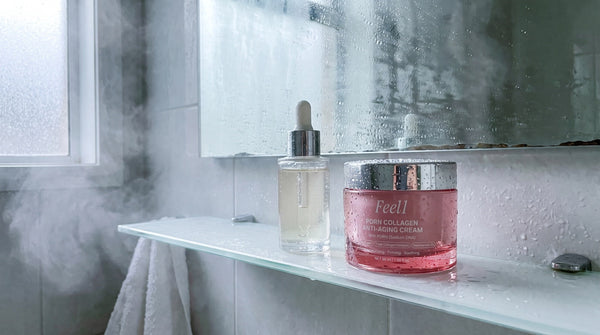
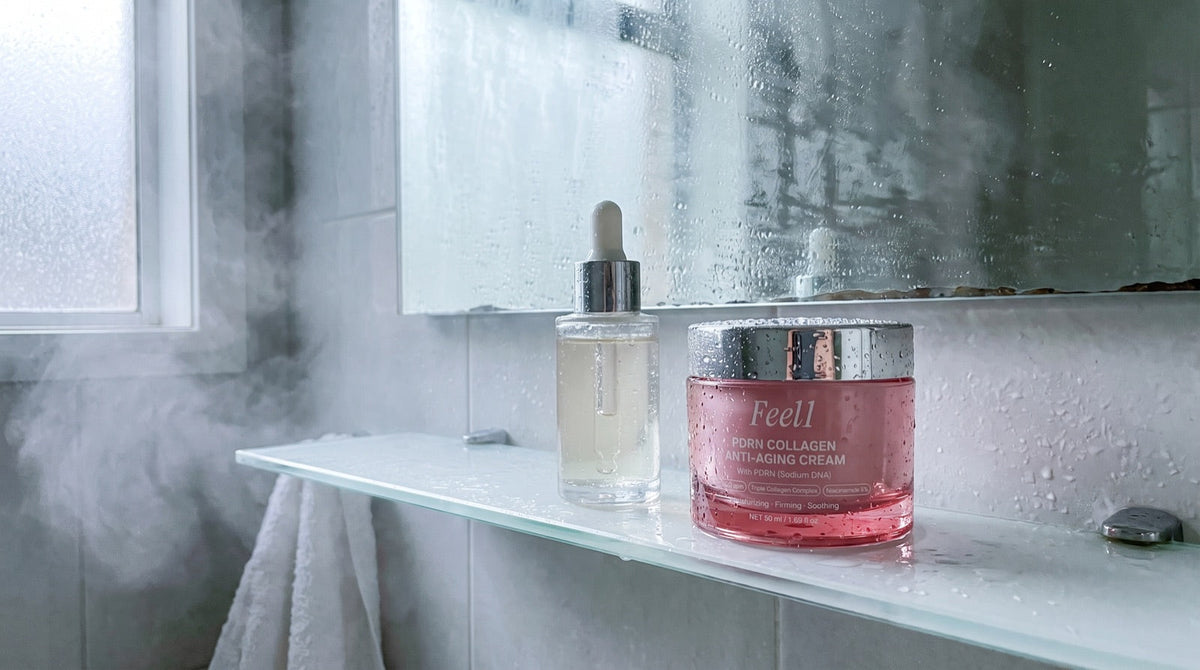
Our cream was built to be the constant in a routine like this. The label declares PDRN (sodium DNA) at 1,000 ppm, alongside 5 percent niacinamide and a collagen complex, with no retinoid inside, so it works in the morning, on rest nights and on both sides of the sandwich. It will not do the retinol's job, and it is not meant to. A plain fragrance-free ceramide cream can buffer retinol too; ours adds the PDRN and niacinamide layer on top. Full ingredients are on the product page.
This guide is general information, not medical advice. Please check with a physician or dermatologist before starting, above all during pregnancy, with a skin condition or with a fish allergy.
Sources
- American Academy of Dermatology, Retinoid or retinol?: https://www.aad.org/public/everyday-care/skin-care-secrets/anti-aging/retinoid-retinol
- Harvard Health Publishing, Do retinoids really reduce wrinkles?: https://www.health.harvard.edu/staying-healthy/do-retinoids-really-reduce-wrinkles
- Kafi et al., Improvement of naturally aged skin with vitamin A (retinol), Arch Dermatol (2007), PubMed: https://pubmed.ncbi.nlm.nih.gov/17515510/
- Squadrito et al., Pharmacological Activity and Clinical Use of PDRN, Front Pharmacol (2017), PMC: https://pmc.ncbi.nlm.nih.gov/articles/PMC5405115/
- Alhussain et al., Polynucleotides and Polydeoxyribonucleotides for Skin Rejuvenation, Postoperative Scar Prevention, and Wound Healing: A Systematic Review of Randomized Clinical Trials, Cureus (2026), PMC: https://pmc.ncbi.nlm.nih.gov/articles/PMC13453133/
Frequently asked
Can PDRN reduce retinol irritation?
It may help your skin tolerate retinol, mainly because a PDRN cream hydrates and soothes the surface while retinol dries it. No study has tested PDRN specifically as a retinol buffer, so think of it as a comforting moisturizer layer rather than an antidote. Slow frequency and the sandwich method do most of the work.
Should I skip retinol on nights I use a PDRN mask?
During the first eight weeks, yes. Make mask evenings rest evenings, so you never combine a long soak of hydration, which can help retinol penetrate more, with a skin that is still adjusting. Once retinol feels routine, you can use the mask, let your face dry completely, then apply retinol and cream as usual.
How long before I see results from retinol with PDRN?
Hydration from the PDRN cream shows the first morning, but that is a surface effect. Changes from retinol take longer: Harvard Health expects wrinkles to look softer after three to six months of steady use, with the fullest results after six to twelve. Twelve weeks gets you through the adjustment, not to the finish line.
Can I use PDRN and retinal (retinaldehyde) together?
Yes, the same way. Retinal converts to the active form in fewer steps than retinol, so it often works a little faster and can sting more. Choose the lowest strength on offer, stay on two nights a week for a full month, and keep the PDRN sandwich longer before trying retinal directly on bare skin.