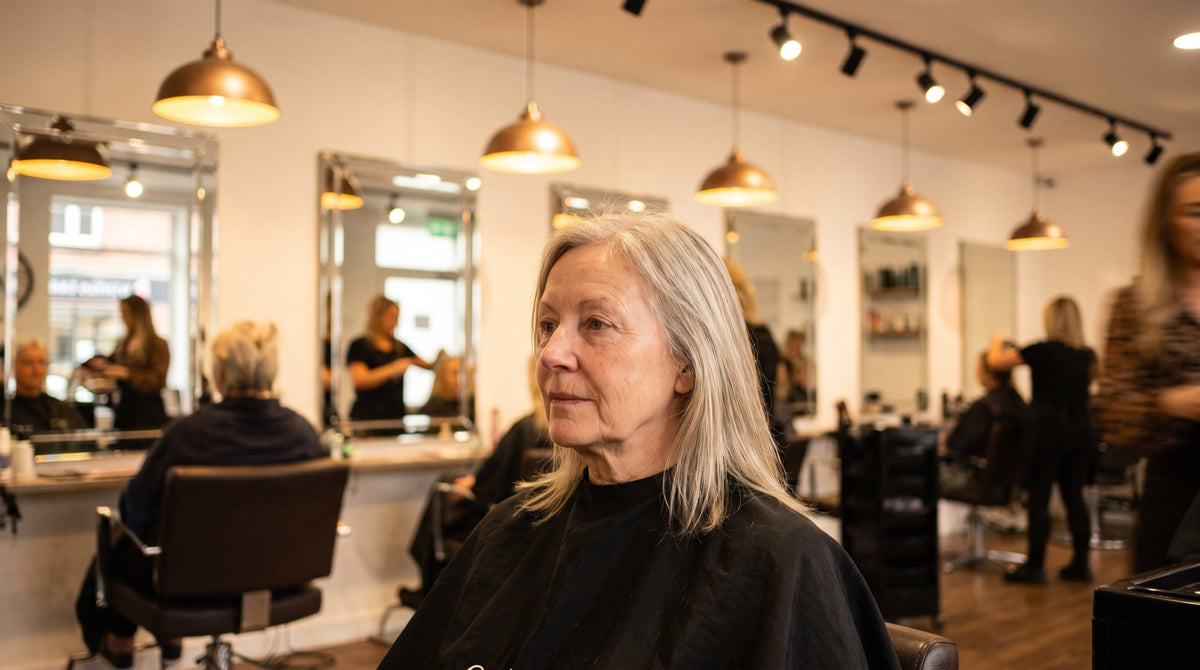


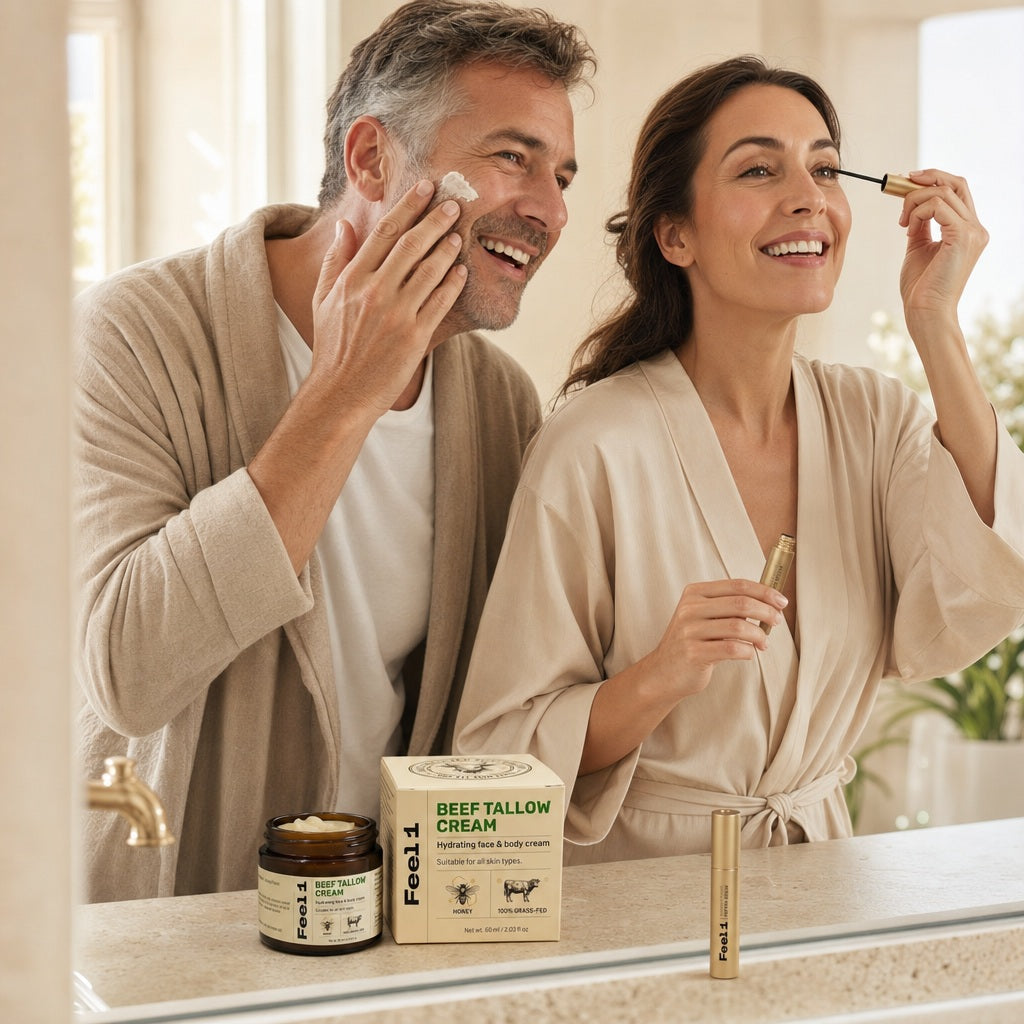


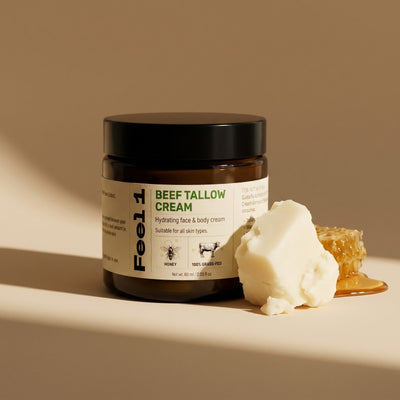
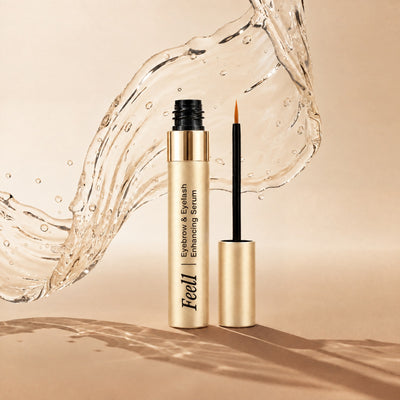
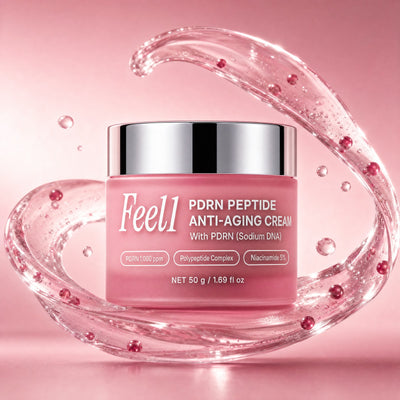
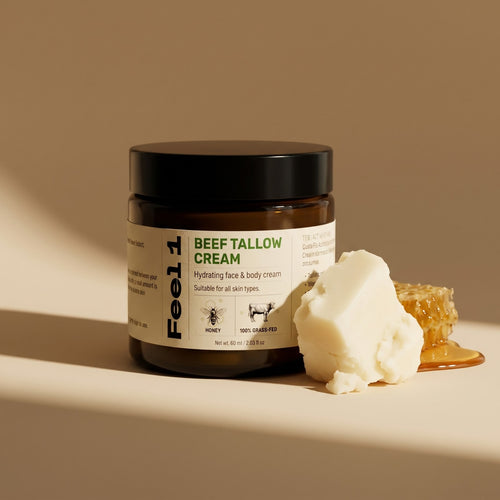
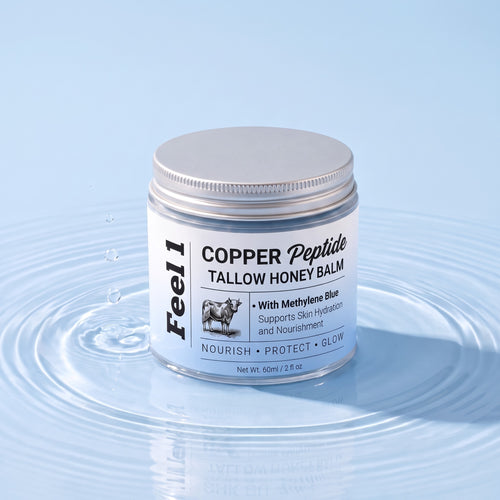

Four steps, four products, ten minutes a day. Not because simple is fashionable, but because skin over fifty responds better to a few things done consistently than to eleven things done erratically.
The ten-step routine was designed for skin in its twenties: oily, resilient, and mostly concerned with breakouts. Skin over fifty has the opposite problem. Sebum production has fallen, the barrier is thinner, and the reaction to over-treatment is not a spot but weeks of stinging and redness.
So this routine subtracts rather than adds. Here it is, then the reasoning.
The routine
| Morning | Evening | |
|---|---|---|
| 1. Clean | Lukewarm water, or a gentle bar if you prefer | Gentle cleanse, twice if you wore makeup |
| 2. Treat | A water-based active on damp skin | One active — peptides, PDRN or a retinoid |
| 3. Seal | A small amount of balm where you are dry | Balm, last, over everything |
| 4. Protect | Sunscreen, every day | — |
Step 1: Clean less than you think
The most common mistake in this age group is cleansing as if the skin were still oily. It is not. A foaming cleanser twice a day strips what little sebum remains and leaves that tight feeling people mistake for cleanliness.
In the morning, lukewarm water is genuinely enough for most people. In the evening, one gentle wash — or two passes if you wore makeup or sunscreen, because sunscreen does not come off with water alone.
The test: if your skin feels tight five minutes after washing, the cleanser is too harsh. That is not a small point — it is the root of most of the dryness people then buy expensive creams to fix.

Step 2: One active, chosen for your actual problem
Pick one. Not three.
- Dehydration, dullness, thin-looking skin → PDRN or a hydrating serum. Fastest visible payoff, lowest risk. See what is PDRN?
- Loss of firmness → copper peptides, nightly, and be patient for eight weeks. See copper peptides.
- Texture and photodamage → a retinoid, introduced slowly, if your barrier can take it. See peptides vs retinol.
- Pigmentation → niacinamide or vitamin C in the morning, over months.
If you want two, use them at different times of day rather than layering. If you want three, you do not — you want to pick better.
Step 3: Seal, and stop skipping it
This is the step that separates a routine that works from one that does not, and it is the one most often left out.
Skin over fifty loses water faster than it can replace it. An occlusive layer over everything else does two jobs: it holds that water in, and it keeps the actives underneath in contact with the skin instead of evaporating off. A serum without a seal is a serum doing half its work.
A rice-grain amount, on damp skin, warmed between the fingertips first. Applied properly, it should not feel greasy after ten minutes — if it does, you used too much rather than the wrong product.

Step 4: Sunscreen, which is not negotiable
Roughly 80% of visible facial ageing is attributed to UV exposure. Every other step on this list is fighting damage that sunscreen would have prevented in the first place.
Daily, including winter, including indoors near windows, including on grey days. If you only do one thing from this article, do this one — it outperforms every serum ever sold.

What the routine deliberately leaves out
- Toner. A leftover from when cleansers were alkaline. If yours is a hydrating essence, it is a serum with a different name; keep it if you like it.
- Weekly scrubs. Physical exfoliation on thinning skin causes more damage than it removes.
- Separate eye cream. Optional. Whatever you use on your face, used gently around the orbital bone, does the same job. Buy one if you want a lighter texture there, not because a rule says so.
- Sheet masks as a routine step. Pleasant, occasionally useful, not a foundation.
How to start without wrecking the barrier
Weeks 1–2: cleanser, balm, sunscreen. Nothing else. Get the base right and see what your skin looks like when it is not being irritated.
Weeks 3–6: add one active, every other night at first, then nightly if it is comfortable.
Week 8: photograph, same light and time of day as your day-one photograph. Decide from that, not from memory.
Month 3: add a second active if you actually want one — at a different time of day, not layered.
Frequently asked
Is four products really enough?
For most people, yes. The limiting factor at this age is consistency and barrier tolerance, not the number of ingredients.
Do I need a different routine for menopausal skin?
The same structure, with more attention to the sealing step and more patience. There is more on the specific changes in menopause skin.
What about the neck and chest?
Same products, same steps, extended downwards. The skin there is thinner than facial skin and gets less attention, which is why it often ages faster.
When will I see something?
Comfort within days. Texture and tone at four to six weeks. Firmness, if it comes, at eight to twelve. Anything faster than that is hydration, which is real but not structural.