





Short answer: use eye patches in the morning if your problem is puffiness, and in the evening if you want the active to have a longer, undisturbed window. Either way they go on clean, dry skin after cleansing and before serum or cream — never on top of moisturiser. Keep the jar in the fridge. Two or three sessions a week is enough.
Most of the questions we get about our patches are not about what is in them. They are about timing: which end of the day, which step of the routine, whether the fridge is a gimmick, what to do on a plane. Here is the whole answer.
When to use eye patches: morning or night?
Both work. They do slightly different jobs, and the honest way to choose is to name what you want from the twenty minutes.
| Morning | Evening | |
|---|---|---|
| Best for | Puffiness, a tired look, prepping for makeup | Dryness, tightness, giving the active a longer window |
| Temperature | Chilled — the cold is half the effect | Chilled or room temperature, either is fine |
| What happens after | Press in essence, cream, sunscreen or makeup | Press in essence, cream, sleep |
| What you notice | Less swelling, smoother surface for hours | Less tightness the next morning |
| When it is the wrong choice | If you are short on time — a rushed patch is a wasted patch | If puffiness is the complaint — it will be back by morning |
If you only ever use them at one end of the day, make it the morning. The effects a patch is genuinely good at — moving fluid, plumping dehydration lines, giving concealer a smooth surface — are effects you want to be awake for. We have laid out what a patch can and cannot do in do under-eye patches work; the short version is that the morning result is the one you will see.
Eye patches before or after skincare?
Before. Specifically: after cleansing, before anything else. This is the step people most often get wrong, and it is the reason patches slide off or seem to do nothing.
- Cleanse. Whatever your normal cleanser is. Rinse well.
- Pat dry. Not damp — dry. A hydrogel patch grips dry skin and slides on wet skin.
- Patch. Straight from the fridge, on the orbital bone a finger's width below the lashes, wide end towards the nose. Fifteen to twenty minutes. Set a timer; it is easy to forget them.
- Press in the essence. Do not rinse, do not wipe. Tap what is left into the skin with the ring finger until it is absorbed.
- Then the routine. Serum, eye cream, moisturiser, sunscreen in the morning, in that order. The cream seals what the patch delivered.
Why not after? Two reasons. A serum or cream leaves a film, and a patch on a film does not seal — it floats, and the essence has to get through the film before it reaches the skin. And if the film is oily, the patch will not stay put at all. Cleanse, dry, patch, then everything else. Where each of those later steps sits in a full routine is covered in skincare layering order.

Morning: for puffiness
Morning puffiness is fluid. It settles in the loose tissue under the eye while you lie flat, and it drains on its own over the first hour or two of being upright. A patch speeds that up in three ways: cold narrows the small surface vessels, the weight of the gel applies light pressure, and the occlusion hydrates the surface so the skin over the swelling looks smoother even before the fluid has gone.
The practical routine, if mornings are your reason for buying patches:
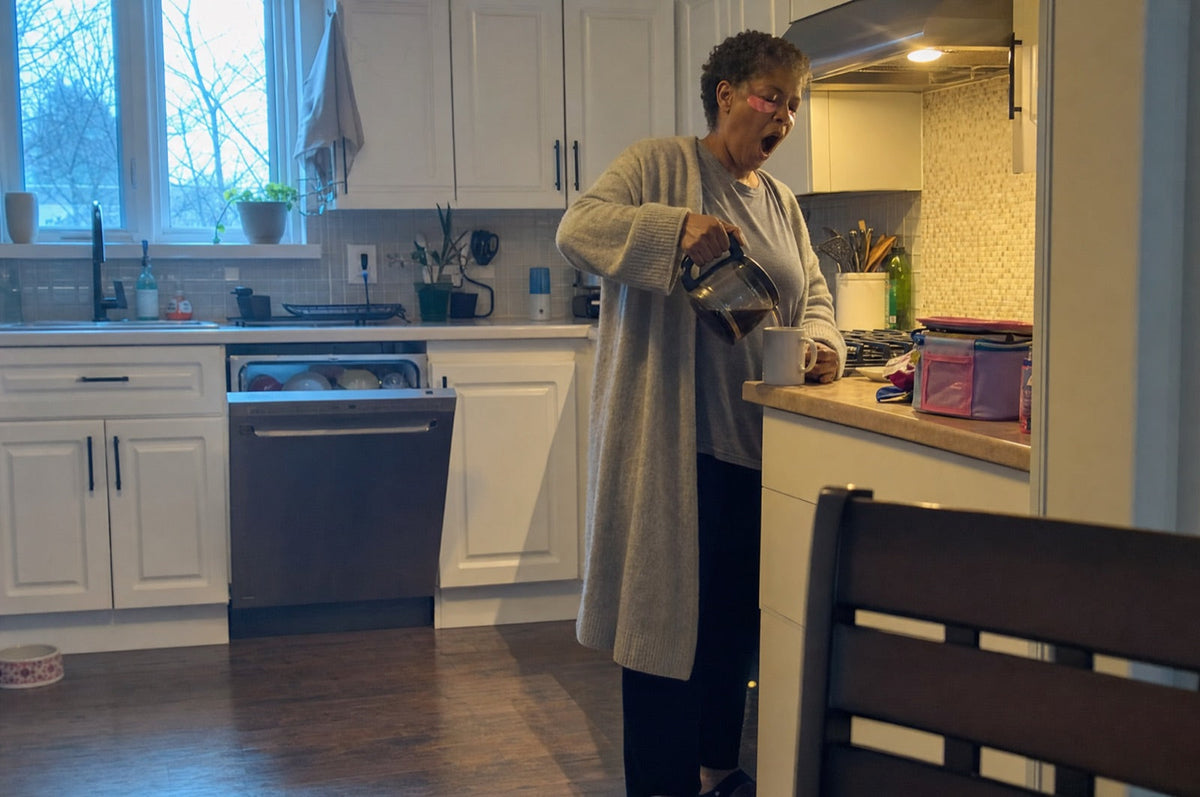
- Patch before coffee, not after. Put them on straight after cleansing, then make breakfast. Twenty minutes passes on its own.
- Tap first. Two minutes of light tapping along the orbital bone, inner corner outwards, before the patch goes on moves more fluid than the patch does alone.
- Chilled, always. At room temperature the de-puffing is modest. From the fridge it is the thing people notice. We tested both on our own team before launch, and the fridge version is the reason the jar has a lid that seals.
- Look at the night before. Salt, alcohol and sleeping flat all put fluid under the eye. A second pillow is the cheapest de-puffer there is.
If the "puffiness" is there all day, every day, it may not be fluid at all — it may be a fat pad or a hollow that casts a shadow, and no patch moves those. Dark circles, hollows or puffiness has a two-minute mirror test that tells you which you have.
Night: as an active window
The case for an evening patch is different. Puffiness is not the target — it will be back by morning whatever you do. The target is contact time for whatever is in the essence.
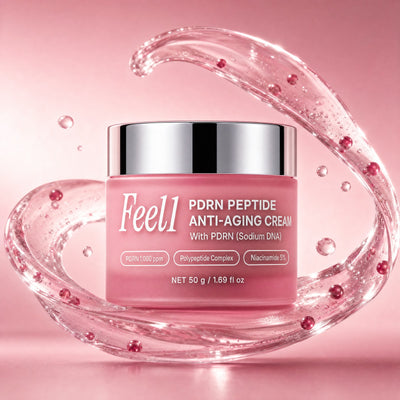
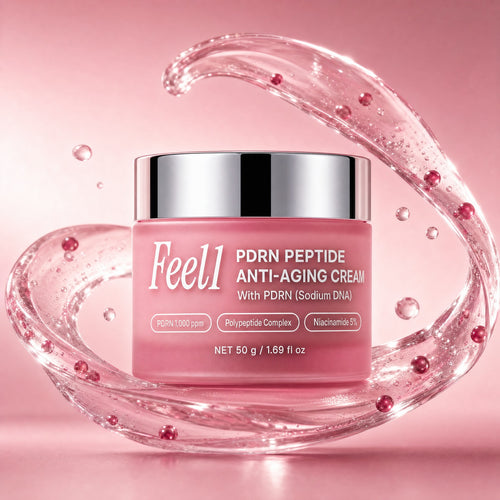
Our patches carry allantoin, licorice, niacinamide, salmon-derived PDRN, ceramide, collagen, centella and hyaluronic acid, in that order. In the morning the patch comes off and the skin gets sunscreen, makeup, wind and a day. In the evening it comes off, the cream goes on — ours is the PDRN Capsule Cream, same active — and the skin is left alone for eight hours with the hydration already in place. That is a better window for an active than a Tuesday morning, and it is why we use ours in the evening more often than the marketing would suggest.

Two rules for the evening. Do not sleep in them — once the gel dries it begins pulling moisture back out of the skin, which is the opposite of the point. And if you use a retinoid at night, put the patch on a different night or apply it first and leave the retinoid for another evening; the skin does not need both asks in one session. What PDRN does in that window, and what it does not, is in what PDRN is in skincare.
Before makeup
Yes, and this is the case the format was built for. Twenty minutes of occlusive hydration leaves a surface that concealer sits on rather than settles into, and there is less to conceal. The rules are the ones above: clean skin, press the essence in, give the eye cream a few minutes to settle, then makeup. Straight from patch to concealer, and the concealer slides.
How a working makeup artist actually uses patches — and what to do on the mornings when there is no time for them — is not our expertise. Danny Rose covers it from the chair in what he uses instead of eye patches.
Should you keep eye patches in the fridge?
Yes. This is not a marketing flourish. Cold constricts the small vessels under the thin skin of the under-eye, which is most of the visible morning de-puffing, and a chilled gel holds its cold for the full twenty minutes because it has mass. A patch at room temperature still hydrates; it just does much less for swelling.
Three practical points:
- Fridge, not freezer. Frozen gel is stiff, does not conform to the face, and can be unpleasant on skin that thin. The door shelf is the right temperature.
- The whole jar goes in. Ours is a jar of thirty pairs sitting in a shared essence. It goes in the fridge once and stays there, lid on tight. Taking the jar out, leaving it on the counter and putting it back is what dries the top layer.
- Use the spatula or clean tweezers. Fingers in the essence bring whatever is on them into a jar that has to last weeks. This matters more in a jar than in a sachet, and it is the trade-off for the price per pair.
Eye patches when travelling
Patches travel well, with two adjustments.
On a plane. Cabin air is drier than almost any room, and the under-eye shows it first. A patch an hour before landing rehydrates the surface and moves the fluid that pooled while you sat still. It will not be chilled, and that is fine — hydration is the point here, not cold. Wipe hands first; a plane is not a bathroom.
In a hotel. Most rooms have a fridge, and the jar goes straight in on arrival. A morning patch after a bad night in a strange bed is the most useful thing in a wash bag.
Packing. A screw-lid jar is fine in a carry-on. Keep it upright, and do not decant patches into a bag — without the essence they dry out within hours.

A weekly schedule that works
The pattern we tested and the one we still use: three sessions a week, not seven. There is no evidence that stacking sessions builds a bigger result; the gains come from consistency over weeks.
| When | Session | Why |
|---|---|---|
| Monday morning | Chilled, after cleansing, before cream | The week's first face; puffiness from the weekend |
| Wednesday evening | After cleansing, before night cream | The active window; nothing to wash it off until morning |
| Friday morning | Chilled, before makeup | The occasion patch — photographs, meetings, an evening out |
| Extra | Morning after a flight, a late night or a salty meal | Fluid, not habit |
Skip a session if the skin is red or tight, and stop for a week if any redness lasts beyond an hour after removal. The under-eye is the thinnest skin on the face and it is allowed to have opinions.
Frequently asked
Can I use eye patches after moisturiser?
Better not. Moisturiser leaves a film, and a patch on a film floats rather than seals, so the essence has to get through the cream before it reaches the skin — and if the cream is oily, the patch slides off. Cleanse, pat dry, patch, then moisturiser on top of the pressed-in essence.
Should I wash my face after eye patches?
No. The essence left on the skin is the active you paid for. Press it in with the ring finger until absorbed, wait a minute, then continue with cream and, in the morning, sunscreen. Rinsing it off wastes most of what the twenty minutes delivered.
How long before makeup should I use eye patches?
Take them off about half an hour before you start. That gives twenty minutes on the skin, a couple of minutes to press in the essence, and five minutes for the eye cream to settle before concealer. Straight from patch to concealer and the concealer slides on the essence.
Can I use eye patches on a plane?
Yes, and it is one of the better uses. Cabin air is very dry and the under-eye shows it first. Wipe your hands, apply about an hour before landing, and expect hydration rather than de-puffing — an unchilled patch still seals, it just does less for swelling.