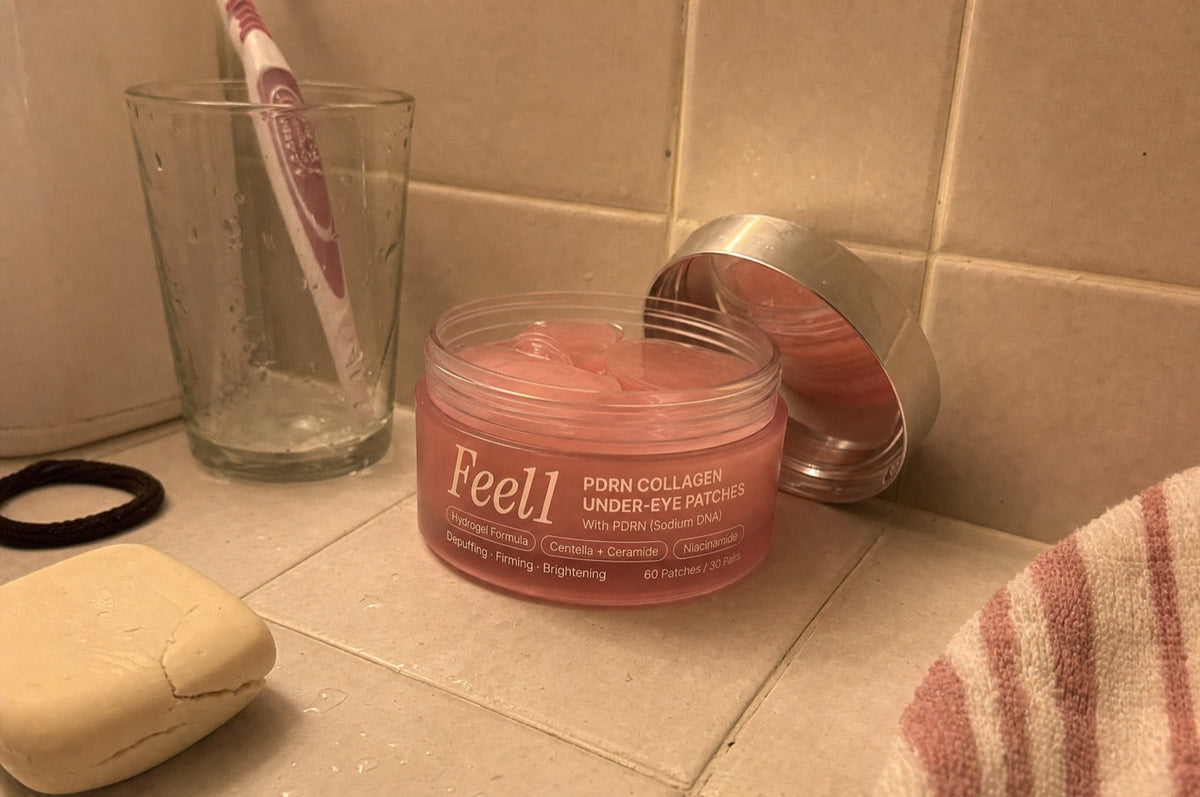







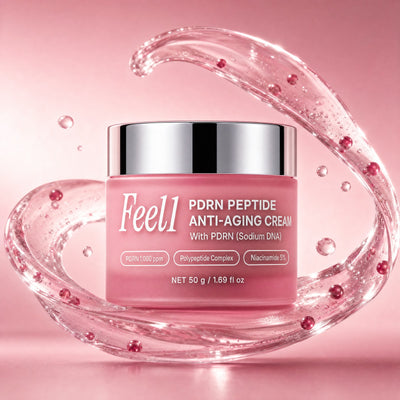


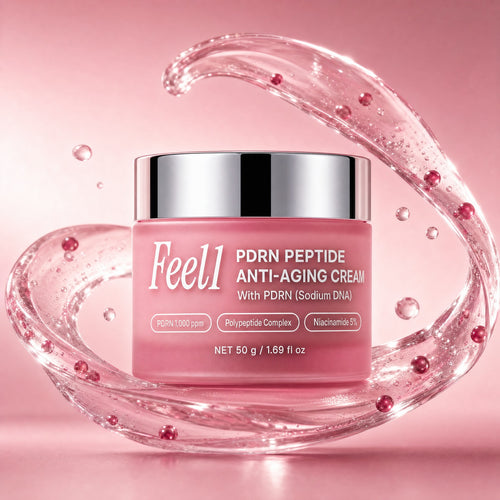

Short answer: eye cream is the daily habit — it protects the barrier and delivers an active a little at a time over weeks. Eye patches are the twenty-minute event — a sealed dose of hydration and cold that visibly de-puffs and smooths on the day. Neither replaces the other. Most people who like one end up using both, in that order: patch first, cream after.
We sell both, which means we have a stake in you buying two things rather than one. So here is the comparison the way we would want to read it: each format gets its strongest point first, then the plain reason it has that strength and the limit that comes with it.
What an eye cream does well
It is there every day. That is the whole argument, and it is a good one. An eye cream goes on twice a day without any ceremony, so whatever active it carries — niacinamide, peptides, PDRN, a retinoid — gets applied fourteen times a week for as long as you keep the jar. Skin changes slowly, on the scale of a four-week turnover cycle, and a small dose repeated for weeks is how a topical earns a visible result. No patch schedule comes close to that frequency.
It protects the barrier. A cream carries lipids — ceramides, fatty acids, an occlusive or two — that sit in the outer layer and slow water loss for hours. The under-eye has almost no oil glands of its own, so this is not a luxury; it is the difference between an area that looks fine at nine and crepey by four, and one that holds.
The limit is contact. A cream is absorbed or evaporated within a couple of minutes, and after that whatever did not get in is gone. It cannot cool, it cannot press, and it cannot hold a wet layer of active against the skin. On a puffy morning it does very little, because puffiness is fluid, and fluid does not respond to a thin film.

What an eye patch does well
It works in twenty minutes. A hydrogel patch is mostly water in a gel matrix. Laid on the under-eye it forms a seal: water cannot evaporate, the outer layer of skin softens and drinks, and the essence in the gel has nowhere to go but in. That occlusion is why the same active does more in a patch over twenty minutes than it does as a cream over the same twenty minutes. The result is visible when you take the patch off — a plumper, smoother, better-hydrated surface — and it lasts for hours.
It carries cold and weight. A patch from the fridge is a small, cool, slightly heavy object sitting exactly where overnight fluid collects. Cold narrows the surface vessels and weight encourages drainage, which is why a chilled patch visibly de-puffs and a cream does not. We keep ours in the fridge and consider that part of the product.
It suits an occasion. Before a photograph, a meeting, a wedding, a flight — the patch gives a defined window and a defined result, and concealer sits better on a surface that has just been hydrated under a seal.
The limit is that it stops. When the patch comes off, the occlusion ends. The hydration and the de-puffing last hours, and by evening the under-eye is back to its baseline. Twenty minutes three times a week is one hour of contact; a cream applied twice daily is in place all day, every day. A patch also cannot protect the barrier, because it is not there when the barrier needs protecting. We have written the mechanics and the honest limits up separately in do under-eye patches work.
Eye patches vs eye cream compared
| Criterion | Eye cream | Eye patches |
|---|---|---|
| Frequency | Twice daily, indefinitely | Two or three mornings a week, or for an occasion |
| Contact time per use | One to two minutes before it is absorbed | Fifteen to twenty minutes under a seal |
| Morning puffiness | Little effect | Visible reduction in twenty minutes, more from the fridge |
| Dehydration lines | Softens over days of use | Plumps within one session, for hours |
| Barrier protection | Yes, all day | No — only while it is on |
| Active delivery | Small dose, repeated for weeks | Larger dose, held in place, less often |
| Set wrinkles, pigment, hollows | No | No |
| Under makeup | Yes, after it settles | Yes — remove, press in the essence, wait five minutes |
| Cost per use, our range | About $0.20 (PDRN Capsule Cream, $34.99, roughly three months at twice a day) | About $1.00 per pair (PDRN Collagen Under-Eye Patches, $29.99, thirty pairs) |
| Travel | Easy | Easy in a jar; best kept cool |
Two rows deserve a note. Neither format touches set expression lines, pigmentation or a hollow under the eye — those are structural or pigment problems, and hydration does not reach them. If you are buying either product for "dark circles", read dark circles, hollows or puffiness first; it will tell you in two minutes whether a topical can help at all. And the cost-per-use figure for the cream assumes a pea-sized amount twice a day; heavier hands get fewer weeks from a jar.

Which should you choose?
If your problem is morning puffiness
Patches, chilled. This is the one clear win for the patch format, and a cream will disappoint you here. Two minutes of light tapping along the orbital bone before the patch goes on moves more fluid than the patch does alone. If the puffiness is there every morning, also look at salt, alcohol and sleeping flat — a second pillow does more than most products.
If your problem is dryness and fine lines
Cream first, patches as a top-up. Fine lines that come and go with hydration are a barrier problem, and a barrier problem needs something in place every day. A patch will plump them for an afternoon; a cream with ceramides and a humectant will make them appear later and less often over weeks. If you can only buy one, buy the cream.
If your problem is a tired look before an event
Patches, twenty minutes before makeup. The combination of cold, hydration and a smoother surface for concealer is exactly what the format was built for. This is also the case where a patch is worth carrying: a jar in a hotel fridge does more for a morning face than any cream in the bag.
If you want something to work over months
Cream, and patience. An active only earns a visible result through repetition, and twice a day is the repetition that counts. Whether the active is PDRN, niacinamide or a peptide, judge it at four weeks, in the same light, against a photo from day one — not before.
How to combine eye patches and eye cream
The order matters, and it is the reverse of what most people try.
- Cleanse and dry. Patches on top of a cream slide off, and the cream's lipids block the essence from doing anything. Clean skin, patted dry.
- Patch first. Fifteen to twenty minutes, from the fridge, placed on the orbital bone a finger's width below the lashes. Do not push it up against the lash line.
- Press in what is left. Do not rinse or wipe. The essence on the skin is the active you paid for — tap it in with the ring finger until it is absorbed.
- Cream on top. Wait a minute or two, then apply a pea-sized amount of eye cream. It seals the hydration the patch delivered and adds the lipids the patch cannot. On mornings without a patch, cream alone.
- Then the rest of the routine. Sunscreen, makeup, or nothing. If the cream feels like too much under concealer, use less cream rather than skipping it.
On the days that matter, this sequence is what we do ourselves: patch, press, cream. Where it sits inside a full routine — serums, sunscreen, retinoids at night — is in skincare layering order, and the morning-versus-night question for patches specifically has its own answer in when to use eye patches.

Can eye patches replace eye cream?
For puffiness, yes: if that is your only complaint, a chilled patch two or three mornings a week does the job and a cream adds little. For everything else, no. A patch is not there for the twenty-three hours and forty minutes a day it is off your face, and the under-eye needs something during those hours. Anyone telling you a patch is a complete eye routine is describing an event as if it were a habit.
The reverse is more defensible. An eye cream can be a complete routine on its own, and for a lot of people it is. What it cannot do is the morning rescue — the twenty minutes before a photograph when fluid needs to move and the surface needs to look smooth now. That is the gap a patch fills, and it is the reason we make one.
Frequently asked
Do I need eye cream if I use eye patches?
If your only concern is puffiness, no — the patch handles it. If you are also managing dryness, fine lines or a barrier that gets tight by the afternoon, yes. The patch is on the skin for twenty minutes a few times a week; a cream is in place all day, and that daily presence is what those problems need.
Can I put eye cream on after eye patches?
Yes, and you should. Remove the patch, press the leftover essence in with your ring finger, wait a minute, then apply a pea-sized amount of cream. The cream seals the hydration the patch delivered and adds the lipids the patch cannot carry. Do not apply cream before the patch, or the patch slides off and the essence is blocked.
Are eye patches better than eye cream for puffiness?
Yes, clearly. Puffiness is fluid that has settled overnight, and moving it takes cold, light pressure and time — all three of which a chilled gel patch provides and a thin film of cream does not. Two or three mornings a week from the fridge is the pattern that works; a cream on the same morning changes little.
Is eye cream or eye patches better for wrinkles?
For dehydration lines, the patch plumps them within one session and the cream softens them over weeks; used together they cover both timescales. For set expression lines, neither does much — those are structural, and no topical patch or cream will remove them. Judge either product at four weeks, not four days.