





The rule is one sentence long: thinnest to thickest, water before oil. Everything else in this article is the reasoning, and the handful of exceptions worth knowing.
Layering order is not a ritual invented to sell more products. It follows from one physical fact: your skin's outer layer is designed to keep water out and oil in. Water-based products have to reach it first, because once a layer of fat is in place, nothing water-based crosses it.
Get the order wrong and the expensive thing sits on top of a barrier doing nothing. That is the whole problem, and the rule solves it.
The order, morning
- Cleanse — or just rinse with lukewarm water if your skin is dry. Overnight you accumulated sebum, not dirt.
- Water-based actives — vitamin C, niacinamide, hydrating serums. On damp skin.
- Moisturiser — the emulsion layer.
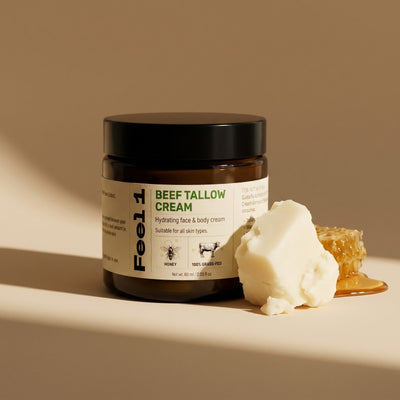
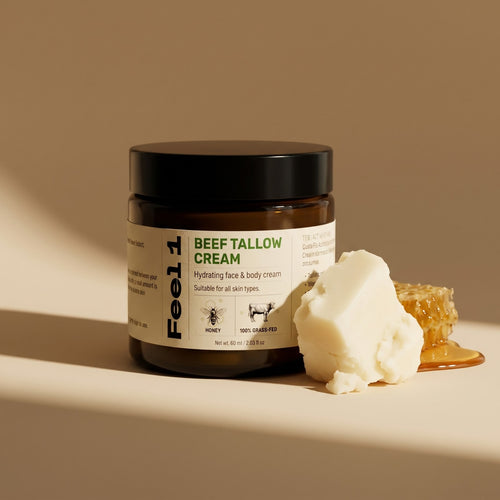
- Occlusive balm — only if your skin is genuinely dry, and only in a small amount.
- Sunscreen — always last, always its own step, and the single highest-value thing on this list.
The order, evening
- Cleanse — twice if you wore makeup or sunscreen: an oil-based first pass to dissolve it, then a gentle wash.
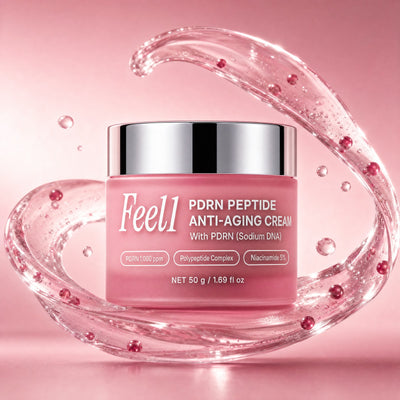
- Treatment — one active, not three. A retinoid, or an acid, or copper peptides, or PDRN.
- Moisturiser
- Occlusive balm, to seal it all in overnight — the one step that makes everything underneath work harder.

Damp skin is not a detail
The instruction to apply to damp skin gets ignored because it sounds fussy. It is the difference between a humectant pulling water from the air onto your face and pulling it out of your own deeper skin layers, which in dry air is exactly what happens.
Sixty seconds is the window. Pat, do not dry, then start.

What actually should not be mixed
Fewer things than the internet suggests, and for narrower reasons.
L-ascorbic acid and copper peptides
Not in the same layer. Vitamin C needs a low pH that peptides do not tolerate, and copper is redox-active in the presence of a strong reducing agent. Morning and evening solves it — the full reasoning is in can you use copper peptides with vitamin C?
Retinoids and direct acids on the same night
Not a chemical conflict, a tolerance one. Both disrupt the barrier; together they disrupt it twice. Alternate nights.
Benzoyl peroxide and almost anything active
A strong oxidiser. Keep it in its own step and at its own time of day.
Two exfoliating acids at once
An AHA toner plus a BHA serum plus an exfoliating cleanser is three, and the result is the damaged barrier we wrote about in six signs your skin barrier is damaged.
And what is fine together, despite the rumours
- Niacinamide and vitamin C. The old warning came from a 1960s study using heat and raw ingredients, not finished formulas. Modern products are fine together.
- Niacinamide and almost everything else. It is one of the most cooperative actives there is.
- Retinoids and peptides, on alternate nights or morning and evening.
- PDRN and anything. It is soothing and water-binding; it plays well.
- An occlusive balm over any of the above. That is what it is for.

Five layering mistakes worth fixing today
Balm before serum. Nothing water-based crosses a fat layer. The serum is wasted.
Sunscreen under moisturiser. It needs to be the outermost layer to form its film.
Three actives in one evening. You cannot tell which one is working, or which one is causing the stinging.
Applying to bone-dry skin. Sixty seconds after washing, every time.
Too much of everything. Most people use two to three times what a step needs, which is how a routine ends up pilling.
How long to wait between layers
Less than you have been told. Enough for a layer to stop feeling wet — typically thirty to sixty seconds — is enough for the next one. The exception is a low-pH product like L-ascorbic acid, where a few minutes lets the skin's pH recover before the next step.
The twenty-minute waits circulating online come from prescription retinoid instructions and do not generalise.
The short version
Thinnest to thickest. Water before oil. One active per session. Damp skin. Sunscreen last in the morning, balm last at night.
That is the entire system, and a routine built on it with four products will outperform a nine-step routine applied in the wrong order.