









It is not your imagination and it is not the mascara. The lash cycle changes with age, and three ordinary habits speed it up.
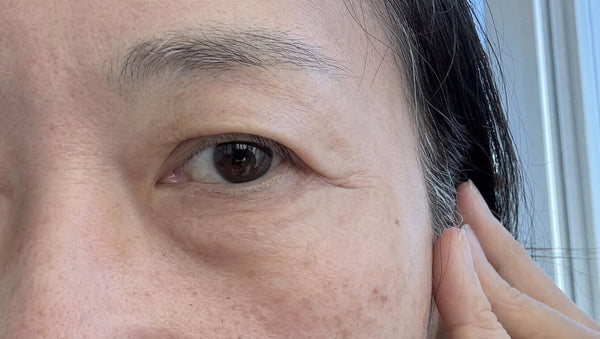
Most women notice it the same way: a mascara that used to be enough stops being enough. The lashes are still there, but the line looks thinner, the outer corner looks bare, and the eye reads as tired even when you are not.
Here is what is actually happening, in order of how much it matters.
1. The growth phase gets shorter
A lash grows for roughly 30 to 45 days, then stops, rests and sheds. With age that active phase shortens. The follicle is still working, but it has less time to push the lash out before it switches off — so lashes shed at a shorter length than they used to.
This is the main mechanism, and it is also the one you cannot argue with. What you can do is stop losing the length you do achieve, which is where the rest of this list comes in.

2. Hormones, specifically oestrogen
Oestrogen influences hair follicle activity across the body, and lashes are not exempt. Through perimenopause and after, falling levels are associated with finer, shorter hair and slower regrowth. Many women date the change to the same year that everything else changed.
Alongside it, the skin of the eyelid thins and produces less oil, which makes the lash line drier and lashes more brittle — a second effect from the same cause.
3. Mechanical damage, which is the fixable part
By fifty, most lash lines have absorbed thirty-five years of daily handling. The usual culprits:
- Rubbing the eyes. Allergies, screens and tiredness all lead to it, and it pulls lashes out at the root.
- Makeup removal by scrubbing. Sideways wiping with a dry-ish pad takes lashes with it every single night.
- Curling after mascara. The coated lash is stiff; the clamp snaps it.
- Waterproof mascara daily. It needs more force to remove, and force is the problem.
- Extensions without breaks. Constant weight on individual lashes shortens their growth phase further.
- Sleeping face-down. A surprising amount of loss for something so ordinary.

4. Things worth ruling out
If the thinning is sudden, patchy, or affects your brows and scalp too, it is worth a GP visit rather than a serum. The common findings:
- Thyroid disorders — both under and over active, and lash and brow thinning is often the first visible sign.
- Iron deficiency — very common in women, and easily tested.
- Blepharitis — a red, flaky, sometimes crusted lash line. It damages follicles quietly and clears up with warm compresses and lid hygiene.
- Certain medications, including some for blood pressure, cholesterol and chemotherapy.
None of these are dramatic, all of them are checkable, and treating one of them works better than anything sold in a bottle.
What actually helps
Change how you take makeup off
Soak the pad properly. Press it against the closed lid for twenty seconds. Let the product dissolve, then wipe downwards once. This single change saves more lashes than any product.
Take the pressure off
Curl before mascara or not at all. Save waterproof for the days you actually need it. Take two extension-free months a year.
Support the lid, not just the lash
The follicle sits in skin that is now drier and thinner than it was. A little of whatever you use around the eye, pressed rather than rubbed along the orbital bone, keeps the area from getting tight and flaky — which is what makes people rub in the first place.
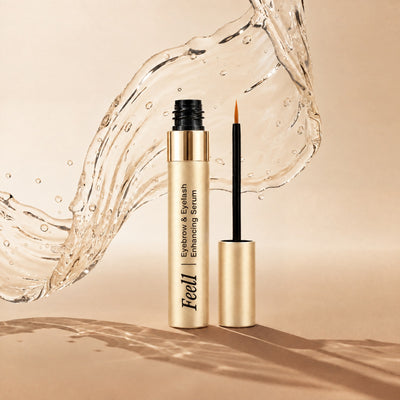
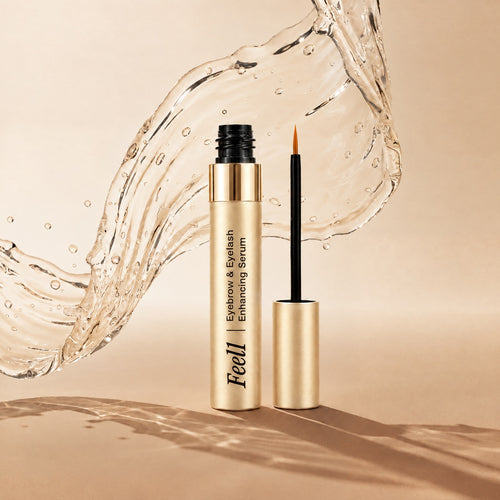
Peptide serum, applied for long enough
Peptides support keratin production and follicle anchoring. They will not restore the growth phase you had at thirty, but fewer lashes breaking means a visibly denser line within eight to twelve weeks. Avoid the prostaglandin serums that promise faster results — the reasons are in our piece on lash serums without prostaglandins.

A realistic expectation
You are not going to get back the lashes you had at twenty-five, and any product promising that is lying. What is achievable is keeping the lashes you still grow — which, for most women who have been quietly losing them to makeup removal for a decade, is a bigger visible difference than it sounds.
Give it three months, photograph the starting point, and change the removal routine on day one.
Frequently asked
Is lash loss part of menopause?
Falling oestrogen affects hair follicles generally, and many women notice lash and brow thinning around the same time as other changes. It is common, and it is not the only cause — mechanical damage usually accounts for more.
How many lashes should I lose a day?
Around five per eye is normal. Handfuls, bald patches or sudden change is worth a doctor's appointment.
Will my lashes come back if I stop extensions?
Generally yes, over two to three months, provided the follicle has not been repeatedly damaged. That is also the honest reason to take breaks before it gets to that point.
Does the same apply to eyebrows?
Yes, with an extra factor: brows thinned by decades of plucking may have follicles that no longer produce. We have written that one up separately in how to grow eyebrows back.