




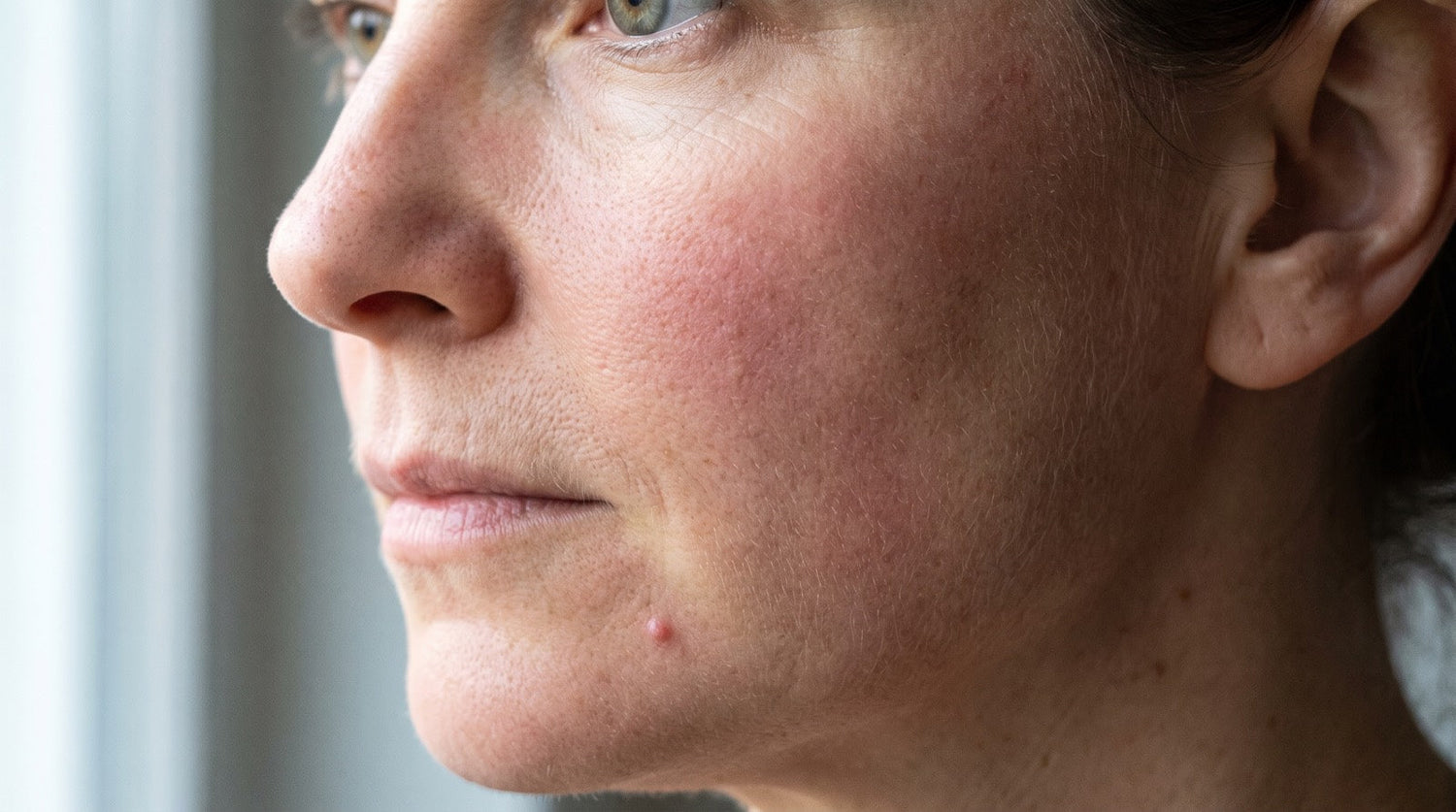
The short answer: for most dry and normal skin, no. For oily, congestion-prone skin, it can — and the reason has more to do with how much you use than with tallow itself.
This is the question that stops people buying, and it deserves a straight answer rather than the two versions currently circulating online — "it's identical to your skin so it can never clog" on one side, "it's animal fat, of course it clogs" on the other. Both are wrong, and the real answer is more useful than either.
Where the comedogenic scale actually comes from
The 0-to-5 comedogenic ratings you find in every ingredient database trace back to a series of studies from the 1970s and 80s. The test method was the rabbit ear assay: a substance was applied, in high concentration, to the inside of a rabbit's ear for weeks, and the resulting follicular plugging was scored.
Rabbit ear skin is far more reactive than human facial skin. The substances were tested neat, not at the 3% you'd find in a finished formula. And the score says nothing about how a whole product behaves — an ingredient rated 4 can sit harmlessly in a well-built emulsion, while a "safe" oil can cause trouble if you apply it in quantity to skin that's already congested.
Which is to say: the scale is a rough historical guide, not a verdict. Dermatologists have been saying so for years. It is still the best shorthand we have, so it's worth reading properly rather than discarding.
So what's tallow's rating?
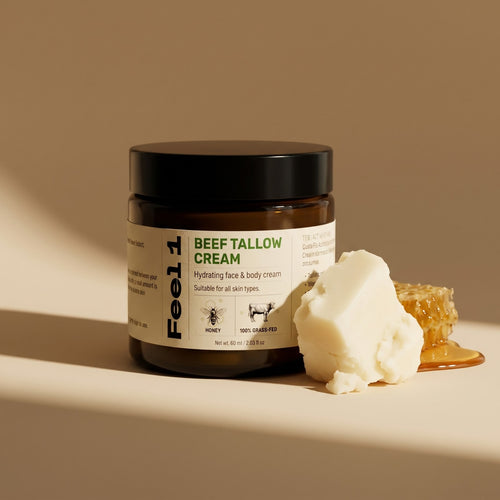
It doesn't have an official one. Beef tallow was never part of those studies, so any number you see attached to it online — usually a confident "2" — was inferred by someone from its fatty acid composition, not measured.
That inference isn't unreasonable, though. We can look at what tallow is made of and at how those individual fats behave:
- Oleic acid (~40–50%) — the one worth watching. Oleic-rich oils are consistently the ones acne-prone people report problems with. It's a fluid, penetrating fatty acid that can disrupt the ordered lipid structure of the outer skin layer, and there's reasonable evidence it plays a role in how comedones form in susceptible skin.
- Stearic acid (~18–22%) — large, solid, and largely surface-dwelling. Rated low on the classic scale.
- Palmitic acid (~24–28%) — mid-range, and a normal component of skin's own barrier lipids.
Put together, that profile suggests a fat that is mild-to-moderate: unlikely to trouble dry skin, plausibly troublesome on oily skin used generously.
What actually blocks a pore
It's worth being precise, because "clogging" is doing a lot of imprecise work in this conversation.
A comedone forms when dead cells lining the follicle stick together instead of shedding, mix with sebum, and plug the opening. Three things drive it: how fast that lining turns over, how much sebum is being produced, and whether the local bacterial population shifts. An occlusive fat on top can contribute — by holding the plug in place and by slightly changing the environment inside the follicle — but it isn't usually the initiating cause.
That distinction matters practically. If your skin was clear and a new balm caused congestion within two or three weeks, the balm is implicated. If you have persistent acne and the balm didn't change it either way, tallow isn't your problem and removing it won't be your solution.

Who should be careful
Go slowly if: your skin is visibly oily by midday; you get closed comedones on the forehead or chin; you already know that coconut oil, wheat germ oil or heavy shea butter cause you trouble. Those three share the oleic-heavy profile, and people who react to one often react to the group.
You're very likely fine if: your skin is dry, mature, or has become drier since your forties; you get flaking or tightness rather than shine; you tolerate other rich balms.
How to test it properly
Two weeks, one area, one variable. That's the whole protocol, and skipping it is why people end up unsure.
- Pick one side of the jawline or one cheek — an area that congests easily if yours does, and that you can compare against the untreated side.
- Apply a rice-grain amount at night, on damp skin, nothing else new in the routine.
- Wait fourteen days. Skin-cell turnover means anything a product triggers takes roughly two to three weeks to surface.
- Compare the two sides in daylight, not bathroom light.
If nothing appears, extend to the full face. If small bumps appear only on the treated side, tallow isn't for your face — it will still be excellent on hands, elbows and shins.

"Is it purging?"
Almost certainly not, and this is where a lot of people waste six unhappy weeks.
Purging is a real phenomenon, but it has a specific cause: an ingredient that speeds up skin-cell turnover — a retinoid, an AHA, a BHA — brings existing microcomedones to the surface faster than they would have arrived on their own. It's a compressed timeline, not new damage.
Tallow does not accelerate turnover. There is no mechanism by which it could purge anything. So if a tallow balm gives you spots, those are new spots, and the correct response is to stop rather than to push through.

If you have oily skin and still want to use it
Plenty of people with combination skin use tallow happily. The trick is placement and quantity:
- Night only. Skip it under makeup and under a day of sebum production.
- Perimeter, not centre. Cheeks, jaw, around the eyes and mouth — the places that get dry. Leave the T-zone alone.
- Genuinely tiny. Warm it between fingertips until it's an oil, then press. If it's visible on the skin, it's too much.
- Two or three nights a week rather than daily, at least to begin with.
The honest bottom line
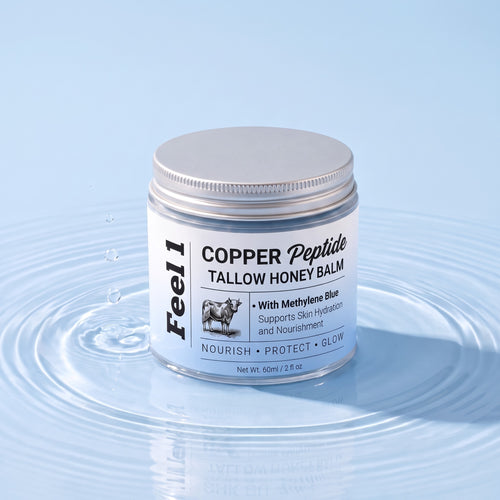
Beef tallow is a moderately rich, oleic-heavy fat with no formal comedogenic rating and a good real-world record on dry and mature skin. It is not "non-comedogenic by nature" — no fat is — and anyone selling it with that phrase is overreaching. It's also not the pore-blocking disaster its critics describe.
Test it for two weeks on one side of your face and you will know more than any rating could tell you.