







Lashes cannot be made to grow faster. They can be stopped from breaking, and for most people that is where the visible difference actually comes from.
The internet offers roughly forty answers to this question, most of them oils. Before going through what works, it helps to know what you are working with — because the lash cycle explains why nearly every method disappoints in week two, and why the ones that do help take two months to show.
The cycle, in plain terms
Every lash goes through three phases. Anagen is active growth, lasting roughly 30 to 45 days. Catagen is a short transition of two to three weeks where growth stops. Telogen is rest, which can last over three months before the lash falls out and a new one starts.
Two consequences follow, and they explain almost everything.
First, at any moment only about 40% of your upper lashes are actively growing. The rest are resting or on their way out. Nothing you apply changes that ratio without a drug.
Second, a lash has a genetically determined maximum length, reached at the end of anagen. You cannot exceed it. What you can do is make sure lashes actually reach it instead of snapping off at week three — and that gap, between potential length and achieved length, is where every honest improvement lives.
Losing around five lashes a day is normal. Losing noticeably more, or seeing bald patches, is a reason to see a doctor rather than buy a serum.

Castor oil: the fair verdict
It is the most recommended remedy on the internet and it deserves a straight answer rather than either of the usual ones.
What it does: castor oil is roughly 90% ricinoleic acid, an unusual fatty acid that makes it thick and strongly occlusive. Coated in it, a lash is more flexible, less brittle and less likely to break when you rub your eyes or take off mascara. Lashes that break less look fuller. That is a genuine benefit.
What it does not do: stimulate growth. There is no controlled human trial showing castor oil lengthens lashes, and no plausible mechanism at the follicle. The dramatic before-and-afters circulating online are conditioning, better grooming and better photography.
What to watch: it is heavy. It migrates into the eye overnight and causes morning blur for a lot of people, and it can trigger contact dermatitis on the lid. If you use it, use a fraction of what feels right, on the lash line only, and stop if the lid gets itchy.

What else is worth your time
Stop pulling them out
Unglamorous and by far the most effective item on this list. The biggest causes of lash loss in women over forty are mechanical: rubbing the eyes, sleeping face-down, aggressive makeup removal, eyelash curlers used on mascara-coated lashes, and extensions left on too long.
Remove eye makeup by pressing a soaked pad against closed lids for twenty seconds and letting it dissolve, then wiping downwards once. Do not scrub sideways. Curl before mascara, never after.
Give extensions a rest
Extensions are bonded to individual natural lashes. Their weight shortens the anagen phase of the lash carrying them, and removal takes a portion with it. Six to eight weeks off, twice a year, changes the picture more than any product.
Check the obvious health causes
Thyroid disorders, iron deficiency and some medications all show up in lashes. So does blepharitis — an inflamed lash line, often with crusting at the roots, which quietly kills follicles and is treated in a fortnight with warm compresses and lid hygiene. If your lash line is red or flaky, that is the thing to fix first.
Peptide serums
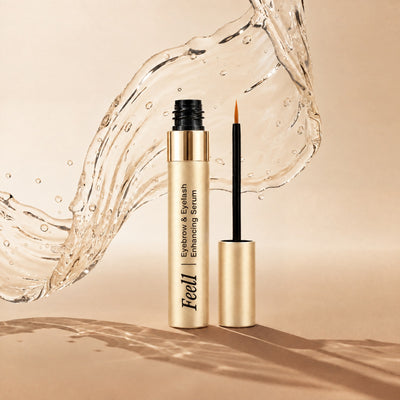
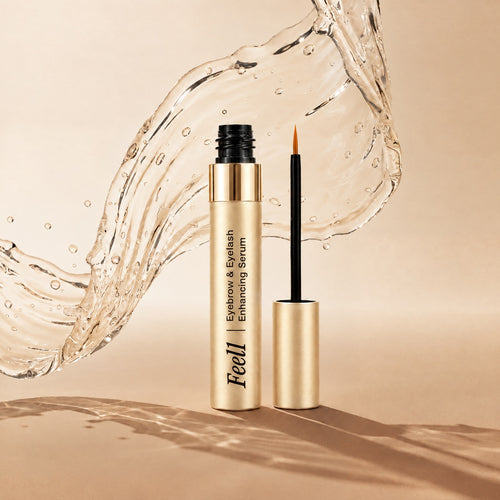
The one product category with a plausible mechanism that is not a repurposed glaucoma drug. Peptides support keratin production and follicle anchoring, which reduces breakage and improves density over eight to twelve weeks. Modest, slow and safe — see our full piece on lash serums without prostaglandins for the difference that matters.

What is not worth your time
- Vaseline. Occlusive, yes. Does nothing for the follicle, and clogs the meibomian glands along the lid margin.
- Green tea, aloe, onion juice. No evidence, and onion juice near the eye is a genuinely bad idea.
- Biotin supplements, unless you are actually deficient — which most people are not. Excess biotin also skews thyroid blood tests, which matters if you are being investigated for hair loss.
- Lash "growth" mascaras. Fibres that sit on the lash and wash off. Nothing wrong with them, but they are makeup.
A routine that actually adds up
- Evening: press-and-dissolve makeup removal, no scrubbing.
- Clean, dry lid: one fine stroke of peptide serum along the upper lash line.
- Twice a week: a warm compress for five minutes, especially if your lid margin looks red.
- Curler before mascara, or not at all.
- Two extension-free months a year.
- Photograph on day one in daylight, same angle. Compare at week eight, not week two.
Frequently asked
How long do eyelashes take to grow back?
A lash pulled out completely takes roughly six to eight weeks to return, and up to three months to reach full length, because it has to wait out the resting phase first.
Does trimming lashes make them grow thicker?
No. That myth comes from body hair, where a cut shaft has a blunt end that feels coarser. Do not trim your lashes.
Why are my lashes suddenly shorter?
Usually breakage rather than loss — the shaft snaps partway and the remaining stub is what you see. Curlers, mascara removal and rubbing account for most of it.
Do lashes stop growing with age?
The anagen phase shortens, so lashes have less time to reach full length before shedding. That is why the same routine that was fine at thirty leaves lashes looking sparser at fifty.