







Short answer: if your eyes are sensitive, choose a lash serum without prostaglandin analogs or fragrance, with a short ingredient list you can read in full. Test it on your inner arm for a week, then start on one eye before moving to both, every other night. Contact lenses come out before you apply. Persistent stinging means stop.
A quick note on where we stand: we make a lash and brow serum ourselves, so read this as a guide from a brand with a stake in the answer. It is written for people who hesitate before putting anything near their eyes: dry eye, contact lenses, hay fever, rosacea around the lids, or a serum that went badly once already. The goal is simple. Pick carefully, start small, and know early whether a product suits you.
What "sensitive" can mean around the eye
"Sensitive eyes" is not a diagnosis. It covers several different situations, and each one changes what you should watch for once a serum is in the routine.
- Dry eye. When the tear film is thin or unstable, anything that drifts from the lash line into the eye stays there longer and is flushed out less. People with dry eye often notice a new product as grittiness or burning by the evening, not straight away.
- Contact lenses. A soft lens acts a little like a sponge. Ingredients that reach the tear film can sit between lens and cornea for hours, so lens wearers need a routine, which we lay out below.
- Allergies. Seasonal allergies make lids itchy and puffy on their own, and people with allergic skin are more likely to develop a contact allergy to a cosmetic ingredient. Eyelid skin is very thin, so it often reacts first, sometimes to products you never applied there, such as nail polish transferred by your fingers.
- Rosacea or blepharitis. Rosacea can affect the lid margins and the eye itself, and blepharitis inflames the edge where lashes grow. Both make the lash line more reactive and are worth getting under control before you add anything new.
- A previous reaction. If one lash serum already left you red or itchy, that is useful information. Find the old box if you still have it and note what was in it. It narrows down what to avoid next time.

If the lids themselves look flaky, tight or rough, the problem may be the skin barrier rather than the eye; our guide to signs of a damaged skin barrier covers how that looks and what helps.
Ingredients to avoid or check before you buy
For sensitive eyes, reading the ingredient list matters more than reading the claims on the front. Four groups deserve your attention.
Prostaglandin analogs
These are the strongest lash-growth ingredients, originally developed as glaucoma drugs, and they come with a known list of eye and eyelid effects. Look for names containing "prost", such as bimatoprost or isopropyl cloprostenate. If you have sensitive eyes, we would leave this class out entirely. We explain the reasoning and the label names in detail in why we make our lash serum without prostaglandins.
Fragrance
Fragrance is one of the most frequent triggers of cosmetic contact allergy, and a lash serum gains nothing from smelling nice. On the label it shows up as Parfum, Fragrance or Aroma. Essential oils and their components (linalool, limonene, citronellol, geraniol) count too, even on a product that calls itself "unscented".
Certain preservatives
Every water-based serum needs a preservative, so "preservative-free" is not the goal. What you want to skip are the ones with a reputation at the eye:
- Benzalkonium chloride, common in eye drops, which soft lenses can soak up and which may irritate a dry eye.
- Methylisothiazolinone and methylchloroisothiazolinone, well-known contact allergens.
- Formaldehyde releasers such as DMDM hydantoin or imidazolidinyl urea, if you already know you react to them.
Other things to notice
High on the list, alcohol denat can sting thin skin. Long lists of plant extracts give you many candidates to rule out if something goes wrong. A short formula is not automatically gentle, but it is easier to troubleshoot.
So what makes the best eyelash serum for sensitive eyes? In our view: no prostaglandin analog, no fragrance, none of the preservatives above, a complete ingredient list you can check before buying, and a return policy in case the patch test fails. Nothing in the published record ties conditioning ingredients like peptides, biotin, panthenol or hyaluronic acid to the pigment or eyelid changes seen with prostaglandins. That makes them the calmer starting point, though a calmer start also means a subtler result. If you want to know what realistic growth looks like, how to grow eyelashes sets expectations.
A 7-day patch test, then a slow start
The American Academy of Dermatology recommends testing a new product on a small patch of inner forearm, morning and evening, for a week to ten days. We treat seven days as the minimum, and ten if you have reacted to a serum before. Only after that does the product go near your eyes, and even then one side at a time.
| Day | Where | What to watch |
|---|---|---|
| Days 1 to 7 | A coin-sized spot on the inner forearm, morning and evening, always the same spot | Redness, itching, small bumps or swelling. Any of them: stop, this serum is not for you. |
| Night 8 | Upper lash line of one eye only, one thin stroke | Stinging that lasts more than a minute, a watery or red eye the next morning, a puffy lid |
| Nights 9 and 10 | Nothing; compare the treated eye with the other one | Itch along the lash line, a gritty feeling, flaking where the lashes grow |
| Nights 11 to 17 | Both upper lash lines, every other night | The same signs, plus dryness that builds up over the week |
| Night 18 onward | Both upper lash lines, as often as the product directions say | Anything new; a phone photo of your lids once a week makes slow changes easy to spot |
The arm test catches most contact allergies, but it cannot tell you how your tear film will handle the product. That is what the single-eye nights are for. Keeping one eye untreated gives you a built-in comparison: if both eyes feel the same, you are probably fine. Once you are past this stage, our guide on how to use eyelash serum for growth covers the daily technique.
A contact lens routine that keeps serum off the lens

Using an eyelash serum with contact lenses mostly comes down to timing. The question is less "can I use one" and more "when do I put it on". The routine we suggest:
- Apply at night, after lenses are out. The prescribing label for Latisse, the prescription lash drug, tells users to take lenses out first and to leave them out for 15 minutes after applying. Evening application gives you hours instead of minutes.
- Clean, dry lids first. Take off eye makeup, wash, pat dry. Serum on a damp lid spreads further than you want.
- Keep to the upper lash line. One stroke, as close to the base of the lashes as you can manage, and never on the inner rim.
- Blot anything that runs. A clean tissue at the outer corner catches the excess before it reaches the eye.
- Lenses back in the morning, washed hands, fresh solution. If they feel gritty or cloudy since you started the serum, take a break for a few days and see whether that clears.
If you only wear lenses occasionally, a glasses day is a good day to start the single-eye nights from the plan above.
What to do if a lash serum stings
A brief cool or tingling feeling right after application can be normal. Stinging that lasts, burning, a red eye or a watering eye are not something to push through. Tonight:
- Rinse the lid gently with lukewarm water, eyes closed. Do not rub.
- If product got into the eye, rinse with clean water or sterile saline.
- A clean, cool compress for a few minutes can ease the discomfort.
- Stop the serum. Do not try it again the next night to "see if it was a fluke".
Once your eye has been completely calm for several days, you can try once more, on one eye only, with a smaller amount. If it stings again, the formula does not suit you, and a different one may. Check which ingredients the two products share; that is often your trigger.
When to see an eye doctor
Some signs need a professional look rather than a pause:
- Eye pain, blurred vision or new sensitivity to light
- Discharge, crusting or a swollen lid
- Redness or itch that is still there several days after stopping the serum
- Any visible change in the color of your iris or eyelid skin
Talk to an eye doctor before you start if you have glaucoma, recent eye surgery, an active eye infection, uveitis or ongoing blepharitis, or if you are pregnant or nursing. If your lashes have thinned noticeably or suddenly, that deserves a check on its own; thinning eyelashes after 45 lists the common causes.

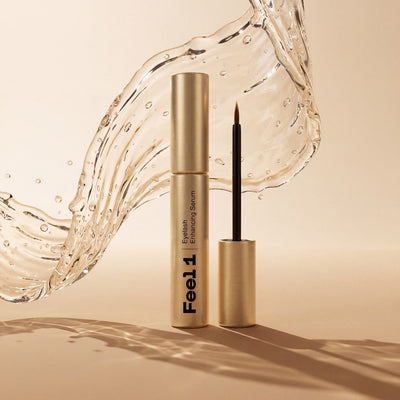
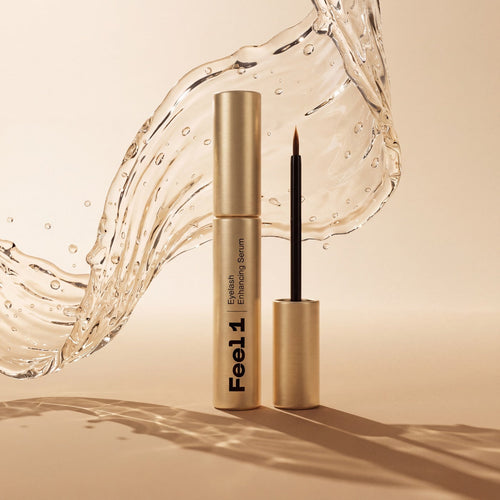
This is where our own serum fits. We formulated it without prostaglandins, their analogs or hormones, built around a polypeptide complex with hyaluronic acid, biotin and centella asiatica extract. It is a conditioning serum, so expect lashes that may look fuller and break less, not the stronger effect of a prescription drug. Use it the same way we describe above: read the full ingredient list on the pack, do the arm test, then start slowly. It works on sparse brows too, as described in how to grow eyebrows back.
This article is general information and not medical advice. If you have an eye condition, check with your eye doctor before using any lash serum.
Sources
- DailyMed (NLM), Latisse prescribing information: https://dailymed.nlm.nih.gov/dailymed/drugInfo.cfm?setid=34f83d9d-2c64-463e-8a90-9a460fedfead
- American Academy of Ophthalmology, lash growth products: https://www.aao.org/eye-health/tips-prevention/latisse
- American Academy of Dermatology, testing a new skin care product: https://www.aad.org/public/everyday-care/skin-care-secrets/prevent-skin-problems/test-skin-care-products
- Baiyasi et al., review of eyelash serums (2024), PubMed: https://pubmed.ncbi.nlm.nih.gov/38475901/
Frequently asked
Can I use lash serum if I have dry eyes?
Often yes, with more caution. Choose a formula without prostaglandin analogs, fragrance or benzalkonium chloride, apply at night to the upper lash line only, and blot any excess. Start on one eye. If your eyes feel drier or grittier over the following week, stop and talk to your eye doctor about treating the dryness first.
Can I use lash serum if my lids reacted to lash extension glue?
Possibly. Extension adhesives are usually cyanoacrylate-based, a different chemistry from a lash serum, so one reaction does not predict the other. A lid that reacted once deserves extra care, though. Wait until it has fully settled, do the full arm test, then start with one eye every other night.
Why does my lash serum sting?
Usually because product reached the eye, often from applying too much or onto a damp lid. Fragrance, alcohol denat and some preservatives can also sting thin eyelid skin. Rinse with lukewarm water and pause. If it stings again with a thin stroke on a dry lid, the formula does not suit you.
Can men with sensitive eyes use lash serum?
Yes. Lashes and eyelid skin work the same way regardless of sex, so the same rules apply: no prostaglandin analogs or fragrance, an arm test first, one eye to start, lenses out before applying. Many men also use a lash and brow serum on sparse eyebrows, which is a lower-stakes place to begin.