



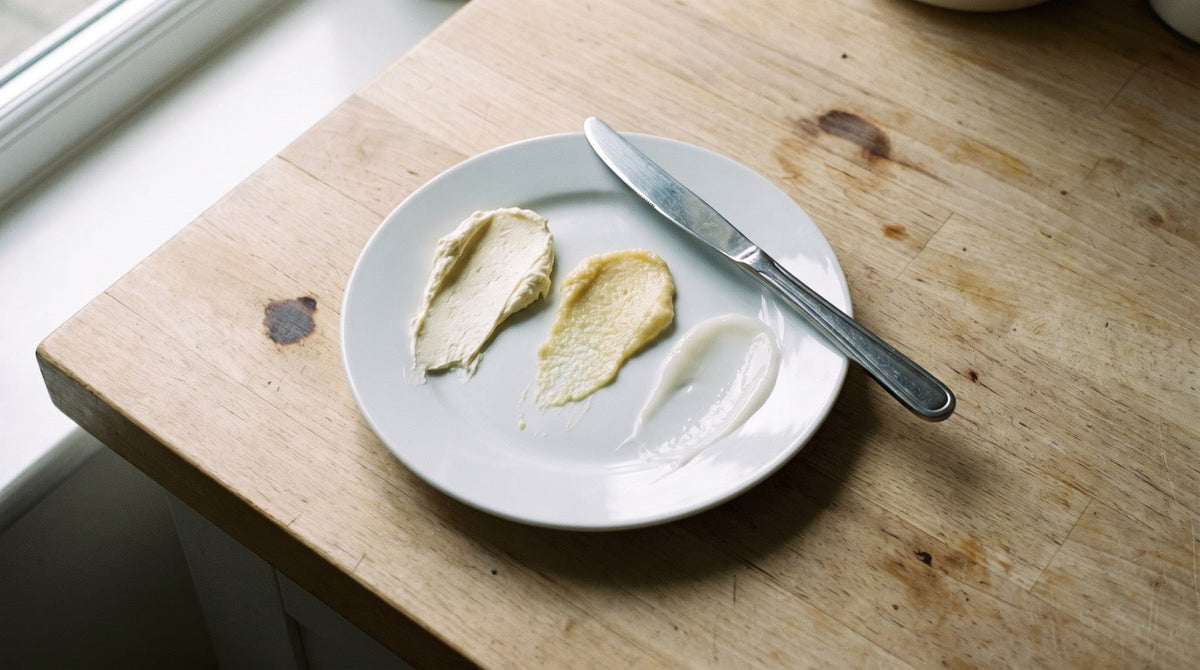
Three good moisturisers that work in three different ways. Which one belongs on your face depends less on which is "best" and more on why your skin is dry in the first place.
Comparisons like this usually end with the writer's own product winning. So here is the conclusion first, and then the reasoning: shea butter is the best all-rounder for body and hands, a ceramide cream is the most sensible choice for a compromised barrier that needs rebuilding, and tallow is the strongest option for mature, genuinely dry facial skin that has stopped producing enough of its own oil. All three are good. They are not interchangeable.
What each one actually is
Shea butter
Fat pressed from the nut of the African shea tree. Solid at room temperature, melts on contact with skin. Rich in oleic and stearic acid, plus an unusually high unsaponifiable fraction — the part that isn't fatty acid, containing plant sterols and triterpenes with genuine soothing properties. That fraction is shea's real distinguishing feature, and it's why it has been used on irritated skin for centuries.
Ceramide creams
Not a single ingredient but a formulation approach. Ceramides are lipids that make up roughly half of the mortar between the cells of your outer skin layer. A ceramide cream supplies them — usually alongside cholesterol and free fatty acids, because the ratio between the three matters more than the ceramide content alone. This is the most researched category of the three by a wide margin.
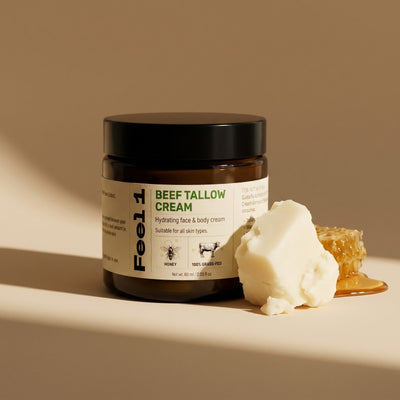
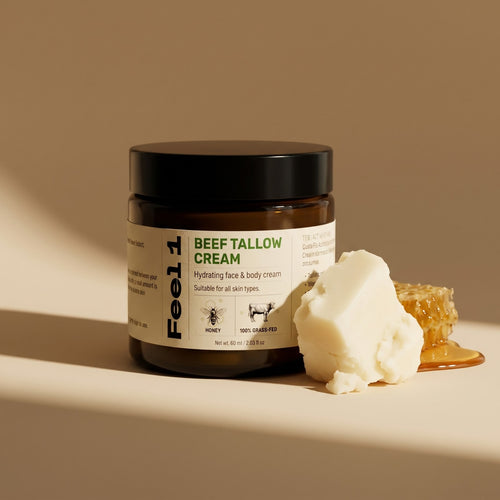
Beef tallow
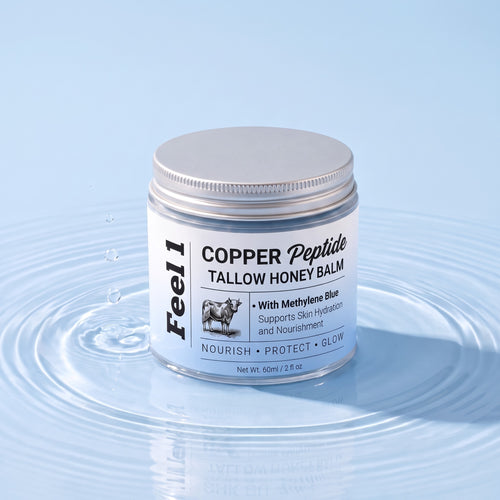
Rendered animal fat, mostly oleic, palmitic and stearic acid, plus a small amount of palmitoleic acid — a fatty acid abundant in human sebum, scarce in plants, and one that declines with age. Highly occlusive, no water phase, no emulsifier needed. The full picture is in our guide to beef tallow for skin.

Side by side
| Beef tallow | Shea butter | Ceramide cream | |
|---|---|---|---|
| Main job | Seals water in | Softens and soothes | Replaces missing barrier lipids |
| Texture | Dense, melts to an oil | Waxy, can feel grainy | Light to medium lotion |
| Palmitoleic acid | Yes, small amount | No | No |
| Needs preservatives | No (anhydrous) | No (anhydrous) | Yes (contains water) |
| Research depth | Thin | Moderate | Strong |
| Suits | Dry, mature facial skin | Body, hands, most skin types | Damaged or reactive barriers |
Where each one genuinely wins
Shea butter wins on versatility and availability
It is plant-based, so it's an option for people for whom tallow isn't. Its unsaponifiable fraction gives it a soothing quality the other two don't have. It is cheap, easy to find unrefined, and excellent on elbows, heels, shins and hands.
Where it falls short: it can feel grainy if it has been through temperature swings, and some people find it heavy or slightly pore-clogging on the face. It also contains no palmitoleic acid, so on skin that has lost that component with age, it feels less "matched" than tallow does.
Ceramide creams win on evidence
If your skin is dry because the barrier itself is damaged — after over-exfoliation, a harsh retinoid start, eczema, or a long course of medication — replacing lipids is more logical than covering them up, and this is the category with the clinical data behind it.
Where they fall short: they are water-based emulsions, so they need emulsifiers and preservatives. That's perfectly safe for most people and precisely the problem for the minority who react to them. They are also the most expensive per millilitre by some margin, and a badly formulated one — right ingredient, wrong ratio — does very little.
Tallow wins on sealing power and simplicity
For skin that leaks water rather than lacks lipids, nothing on this list holds it in better. The fatty acid overlap with human sebum, including palmitoleic acid, makes it sit unusually comfortably on mature skin. And the ingredient list is short enough to be read in a second, which for reactive skin is a feature, not a marketing line.
Where it falls short: the published research is thin — mostly composition analysis and long use rather than controlled trials, and any honest seller should say so. It is animal-derived. And on oily, congestion-prone skin, its high oleic content can cause trouble, which we've covered in does beef tallow clog pores?

Pick by cause, not by category
Your skin is tight and flaky after cleansing but otherwise fine. You're losing water. A tallow balm as the last step at night, on damp skin, is the most direct fix.
Your skin stings, burns or reacts to products it used to tolerate. That's a barrier problem. Start with a ceramide cream and hold off on everything else for a fortnight.
Your hands, elbows and shins are the problem, not your face. Shea butter, generously, and don't overthink it.
Your skin has become drier since your late forties and nothing feels like enough. Sebum production falls with age, and steeply after menopause. This is the situation tallow is best suited to, and where people tend to notice a difference within a fortnight.

Can you use more than one?
Yes, and it's often the best answer. They layer in order of weight: the ceramide cream first, on damp skin, because it needs to reach the barrier it's meant to repair. The tallow balm last, as a seal, in a small amount. Shea stays on the body.
What doesn't work is mixing them in your palm. You dilute the ceramide ratio that made the cream worth buying, and you get a greasy compromise instead of two products doing their jobs.
The honest summary
There is no single best moisturiser here, and anyone insisting otherwise is selling something. Ceramides rebuild, shea soothes, tallow seals. Most people over fifty with dry skin do well with a ceramide product underneath and tallow on top — and could skip the other twelve things in the cabinet.