




Retinol has the better evidence. Peptides have the better tolerability. For skin past fifty that has already reacted badly once, the second one often wins in practice.
This comparison usually gets settled by whoever is selling. So let us settle it by what each ingredient does mechanically, and then by who actually finishes the course — because an ingredient you abandon in week three has an effect size of zero regardless of what the trials say.
What retinoids do
Retinoids are vitamin A derivatives. They bind to receptors in the cell nucleus and change which genes are expressed — speeding cell turnover, increasing collagen production, and reducing the enzymes that break collagen down.
This is the most thoroughly evidenced anti-ageing mechanism in dermatology. Prescription tretinoin has decades of controlled trials behind it for wrinkles, texture and photodamage. Over-the-counter retinol is weaker, because it has to be converted in the skin through two steps before it becomes active, but it works on the same pathway.
The cost of that mechanism: accelerating turnover disrupts the barrier while the skin adjusts. Dryness, flaking, redness and stinging for two to twelve weeks are not a sign it is going wrong — they are the mechanism. It is also photosensitising, which makes sunscreen non-negotiable rather than advisable.

What peptides do
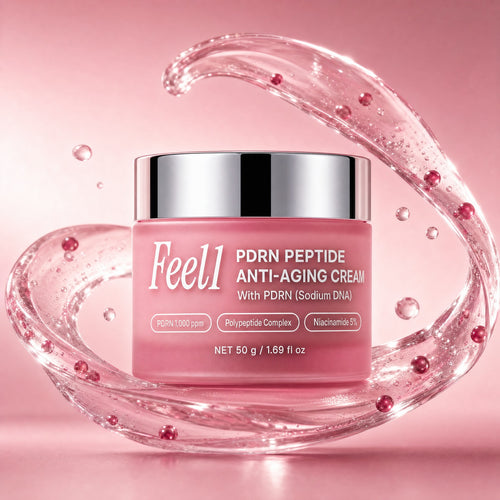
Peptides are short chains of amino acids. Rather than changing gene expression, they act as signals the skin already recognises.
- Signal peptides tell fibroblasts to produce more collagen. Matrixyl is the best known.
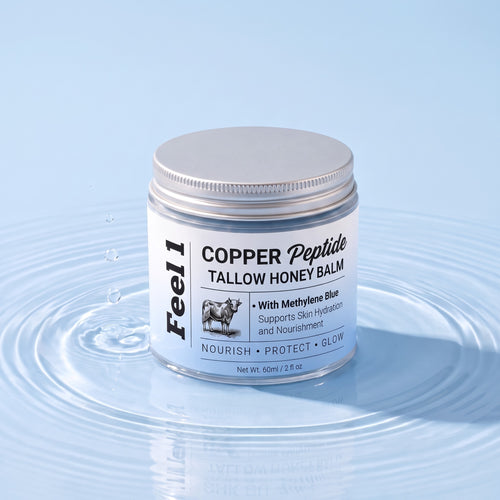
- Carrier peptides deliver a trace mineral the skin needs for repair. The copper peptide carries copper, a cofactor for the enzyme that cross-links collagen — the details are in our piece on copper peptides.
- Enzyme-inhibiting peptides slow the breakdown of existing collagen.
The trade: no retinisation, no photosensitivity, usable around the eyes and on reactive skin, safe to use every day from the start. And a smaller effect, more slowly, with a thinner evidence base — smaller trials, often industry-funded.

Side by side
| Retinoids | Peptides | |
|---|---|---|
| Evidence for wrinkles | Strong, decades | Moderate, smaller trials |
| Time to visible change | 12 weeks | 8–12 weeks |
| Adjustment period | 2–12 weeks of dryness | None |
| Sun sensitivity | Yes | No |
| Suitable around the eyes | Cautiously, low strength | Yes |
| In pregnancy | No | Generally considered fine, ask your midwife |
| Best at | Texture, photodamage, fine lines | Firmness, barrier support, repair |
Which one for which situation
Choose a retinoid if your main concerns are photodamage, uneven texture and fine lines, your barrier is in good shape, you will wear sunscreen daily, and you can genuinely commit to riding out the first two months.
Choose peptides if your skin is reactive, dry, or thinner than it used to be; you have tried a retinoid and quit; your concern is firmness rather than texture; you want something usable right up to the lash line; or you are simply not prepared to look flaky for six weeks. This describes a great many women over fifty, and choosing peptides is not the consolation prize.
Use both if you want the retinoid's evidence without its full cost. Alternate nights is the standard approach: retinoid one night, peptides the next. The peptide nights give the barrier a chance to recover, which in practice means people tolerate a higher retinoid strength than they otherwise would.
How not to combine them
Do not layer them in the same application. It is not that they react — it is that a freshly retinised barrier is being asked to absorb a second active while it is already working hard, and the usual result is irritation blamed on the wrong product.
Two rules that prevent most problems:
- One active per night. Alternate rather than stack.
- Seal whichever one you used. An occlusive balm on top of either shortens the recovery and makes the retinoid ramp-up considerably less unpleasant.

A sensible starting plan
If you are starting fresh: peptides nightly for eight weeks first. Establish tolerance and get the barrier in good condition. Then, if you want more, introduce a low-strength retinoid twice a week and build slowly, keeping the peptides on the off nights.
If you already use a retinoid and it is going well: leave it alone and add peptides on the nights you skip it.
If you tried a retinoid and it went badly: peptides, daily, and no guilt. The evidence gap is real but it is smaller than the gap between a product you use and a product in the drawer.
Frequently asked
Are peptides just a gentler retinol?
No — different mechanism entirely. Retinoids change how cells behave; peptides supply signals and cofactors. They are complements, not weaker versions of the same thing.
Can I use peptides in the morning and retinol at night?
Yes, that works well and is easier to keep up than alternating nights.
How long before I know if peptides are doing anything?
Eight weeks minimum, twelve to be fair to them. Photograph on day one in daylight.
Do peptides survive being on the skin?
Formulation matters. Peptides are fragile and need a well-built, appropriately buffered formula. This is one category where the cheapest option is often genuinely the worse one.