




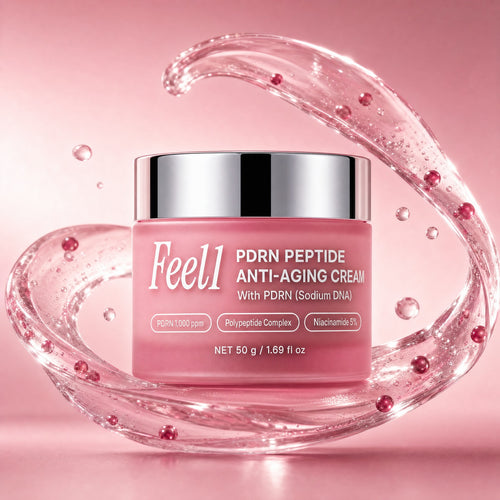

One costs several hundred per session and needs a clinic. The other costs less than a dinner and lives on your shelf. They contain related ingredients and they are not the same treatment — here is the honest comparison.
The "salmon sperm facial" got its name from the internet rather than from medicine, and the name has done a lot of work: it is memorable, slightly shocking, and it sent search volumes vertical the moment a few well-known faces admitted to having had one.
Underneath the nickname is a real clinic treatment with a real mechanism. Underneath the jars now appearing in every beauty aisle is the same active in a form that behaves very differently. Confusing the two is the most expensive mistake you can make in this category — in both directions.
What the clinic treatment actually is
A practitioner injects a gel of polynucleotides — long fragments of purified DNA, usually from salmon or trout — into the dermis, in a grid of small injections across the treatment area. The best-known brand is Rejuran, but several exist. A course is typically three sessions spaced two to four weeks apart, with maintenance every six to twelve months.
The point of the needle is not delivery of a large dose. It's location. Polynucleotides are large molecules, and the fibroblasts they act on live in the dermis, below the barrier that your skin spends its whole life keeping things out of. An injection puts the material where the cells are.
What it costs: roughly £250–£500 or $300–$700 per session in most markets, so £750–£1,500 for a course, plus maintenance. Downtime: small bumps at each injection point for a day or two, sometimes bruising, occasionally a week of visible marks. Who does it: a doctor, nurse prescriber or qualified aesthetic practitioner — this is a medical procedure, not a facial, whatever the nickname suggests.

What the cream actually is
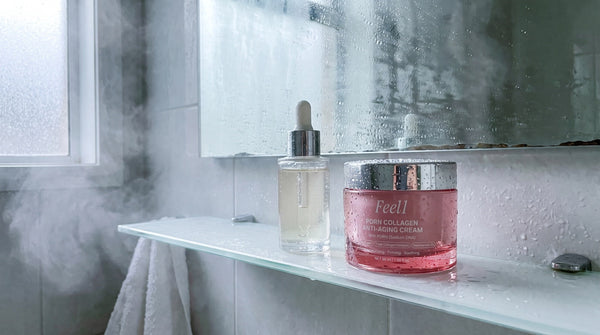
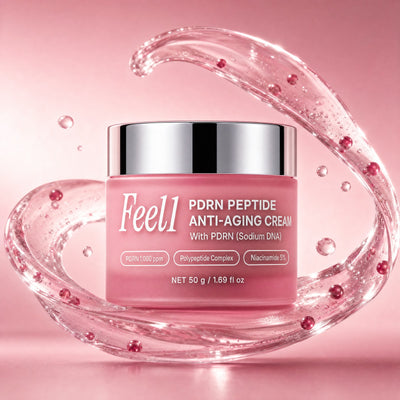
A topical PDRN product contains shorter DNA fragments — polydeoxyribonucleotide — in a water-based formula, almost always alongside ingredients chosen to do complementary work at the surface: niacinamide, hydrolysed collagen, humectants, sometimes peptides.
PDRN is strongly water-binding, which is the property that does most of the visible work in a cream. It is also soothing on reactive skin. What it cannot do is cross an intact skin barrier in meaningful quantity and reach the fibroblasts, because it is far too large a molecule. Any brand implying otherwise is overreaching, and we say so in our full explainer on PDRN.
What it costs: the price of a moisturiser. Downtime: none. Who does it: you, twice a day.
The comparison, without the marketing
| Clinic injection | Topical PDRN | |
|---|---|---|
| Reaches the dermis | Yes | No |
| Firmness, skin quality | Meaningful change over a course | Modest, gradual, mostly surface |
| Hydration | Yes | Yes, immediately |
| Soothing reactive skin | After the initial swelling | Yes, from the first week |
| Cost per year | High | Low |
| Downtime | 1–7 days of visible marks | None |
| Ongoing effort | Sessions, boosters, appointments | Two minutes a day |

So which one should you do?
The clinic route makes sense if your concern is genuine loss of firmness or skin quality, you've already got the basics in place, you have the budget for a full course plus maintenance, and you're comfortable with a medical procedure and a week of looking like you've had one. Go to someone medically qualified, ask what brand and what chain length they use, and be sceptical of anywhere selling it as a "facial".
The topical makes sense if your skin is dehydrated, dull, tight or reactive — which is most skin over forty-five and nearly all skin after menopause. It's also the sensible starting point if you've never used this ingredient: you find out how your skin responds for the price of a moisturiser rather than the price of a holiday.
Both, in sequence, is what a lot of people actually do: a course at a clinic, then a topical to maintain hydration and comfort between appointments. The two aren't in competition; they're doing different jobs at different depths.

What the cream will and won't do — plainly
Will: hydrate noticeably from the first application. Calm redness and tightness within two to three weeks. Soften the fine lines that are actually dehydration lines. Make the under-eye area look less crêpey, especially in the morning.
Won't: lift sagging. Fill a deep static wrinkle. Replace a course of injections. Do anything dramatic in a week, no matter what a before-and-after on social media suggests.
Set against that list, a good topical PDRN is genuinely worth having. Set against injection results, it will disappoint — which is the fault of the comparison, not the product.
Frequently asked
Is there really salmon sperm in it?
The DNA is extracted from salmon milt or roe, both byproducts of the food industry. What ends up in the product is purified nucleotide fragments — no cells, no protein to speak of. The nickname is accurate about the source and misleading about the substance.
Does the injection hurt?
It's a grid of small injections, usually with numbing cream first. Most people describe it as uncomfortable rather than painful. The bumps afterwards bother people more than the procedure.
Can I use the cream after having the injections?
Yes, once the injection points have closed — usually after a day or two. Ask your practitioner for their own timing.
Is it safe if I'm allergic to fish?
Allergies respond to proteins, and purified PDRN contains essentially none. That said, a significant fish allergy is a conversation for a doctor, not for an article.
How long until I can judge the cream?
Four weeks — one full skin-cell turnover cycle. Photograph yourself on day one in daylight and compare in the same light on day twenty-eight.